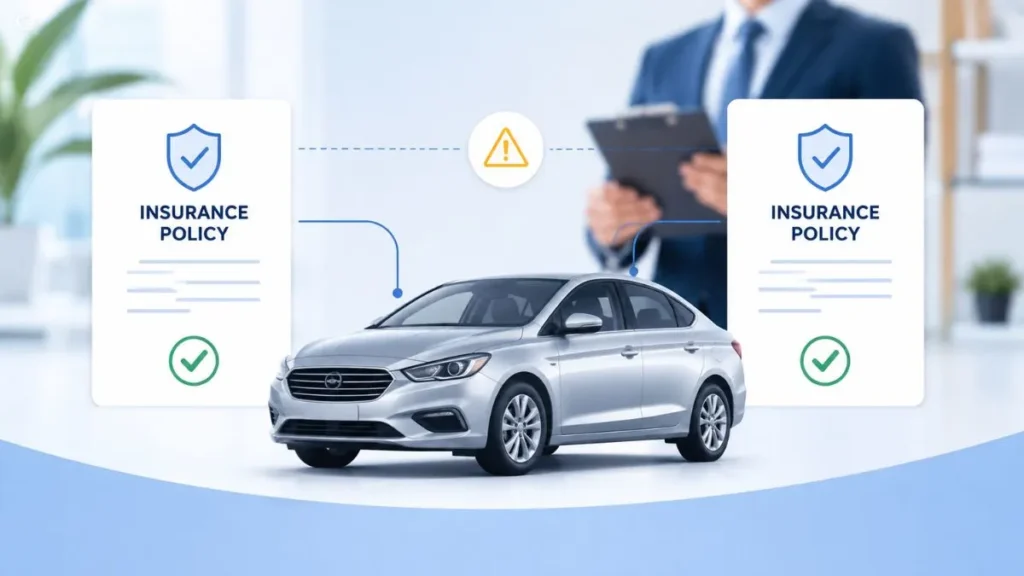
Can I have two insurance policies on one car? The short answer is yes—in many cases, you can legally insure the same vehicle with two insurance policies. However, having duplicate coverage doesn’t mean you’ll receive two claim payouts. Auto insurance only covers your actual financial loss, not provide extra compensation. In this guide, you’ll learn when having two insurance policies makes sense, how claims work, whether it’s legal, and how to avoid costly mistakes.
Can You Have Two Insurance Policies on One Car?
Yes, you can have two insurance policies on one car, and in most U.S. states it’s generally legal. However, whether it’s allowed depends on your insurer’s policy terms and state regulations. While two policies can cover the same vehicle, they don’t provide double financial protection because insurers only pay for your actual covered loss.
This situation isn’t common, but it does happen. Some drivers accidentally purchase a new policy before canceling the old one, while others temporarily overlap coverage when switching insurance companies. In certain cases, a vehicle may also have both personal and commercial insurance or a standard auto policy combined with specialized coverage such as GAP insurance or roadside assistance.
Why Would Someone Have Two Insurance Policies on the Same Car?
There are several legitimate reasons why a driver may have two active insurance policies for the same vehicle.
Switching Insurance Companies
Many drivers start a new policy before the old one expires to avoid a lapse in coverage. This short overlap ensures they’re protected during the transition, but the old policy should be canceled once the new one becomes active.
Accidentally Buying Two Policies
Sometimes people forget to cancel an existing policy after purchasing a cheaper one elsewhere. As a result, both policies remain active, and they unknowingly pay two premiums without receiving additional claim benefits.
Personal and Commercial Use
If a vehicle is used for both business and personal purposes, separate insurance arrangements may exist. In these situations, both insurers should be informed so they can determine how coverage applies if a claim is filed.
Specialized Coverage
Not every second policy duplicates your auto insurance. Products such as GAP insurance, roadside assistance, rideshare endorsements, or mechanical breakdown coverage protect different risks and can complement your primary policy rather than replace it.
What Happens If You Have an Accident With Two Policies?
If you’re involved in an accident while two policies are active, you won’t receive two separate payouts. Instead, notify both insurance companies and disclose the overlapping coverage. The insurers will determine which policy is primary and whether the second policy provides excess coverage based on the Other Insurance Clause in each contract.
When both policies cover the same loss, insurers may use a process called contribution, where they share the payment according to their policy terms. This follows the Principle of Indemnity, meaning insurance is designed to restore your financial position—not help you profit from a claim. For example, if your repair bill is $8,000, you can recover up to $8,000, not $16,000, even if both policies provide collision coverage.
Can You Claim From Both Insurance Companies?
Yes, you can report the accident to both insurance companies if your car is covered by two active policies. However, this doesn’t mean you’ll receive two separate payouts. Most insurers require you to disclose any other active coverage, after which they determine which policy pays first and whether the second policy contributes to the claim.
For example, if your repair bill is $8,000, Policy A may pay $5,000 while Policy B covers the remaining $3,000. Your total reimbursement is still $8,000—not $16,000. Trying to collect the full amount from both insurers for the same damage may be considered insurance fraud, which can lead to claim denial, policy cancellation, or legal consequences.
Pros and Cons of Having Two Insurance Policies
| Pros | Cons |
|---|---|
| Prevents a coverage gap when switching insurers | Paying two insurance premiums |
| Temporary overlap provides continuous protection | Claims may take longer to process |
| Specialized policies can add valuable protection | Duplicate coverage rarely increases your payout |
| Peace of mind during policy changes | More paperwork and policy management |
When Does Having Two Policies Actually Make Sense?
Having two insurance policies isn’t always a bad idea. It can make sense when you’re switching insurance companies, using the same vehicle for both personal and business purposes, or carrying a specialized policy such as GAP insurance or roadside assistance. These situations provide different types of protection rather than duplicate coverage. For most drivers, however, keeping two policies with the same liability, collision, and comprehensive coverage is unnecessary.
When Should You Avoid Having Two Policies?
You should avoid maintaining two policies if they offer identical coverage. Paying two premiums won’t result in two claim payments, and it may create claim delays, unnecessary paperwork, and confusion over which insurer pays first. If your goal is to receive a larger insurance payout after an accident, duplicate coverage won’t help because insurers only compensate you for your actual covered loss.
What Should You Do If You Accidentally Have Two Policies?
If you discover that you have two active policies, take these steps:
- Compare both policies and their effective dates.
- Contact both insurance companies.
- Confirm which policy should remain active.
- Cancel the unnecessary policy.
- Request a refund for any unused premium if you’re eligible.
- Keep proof of cancellation for your records.
Frequently Asked Questions
Is it legal to have two insurance policies on one car?
Yes. In most U.S. states, it’s generally legal, although insurer rules and policy terms may vary.
Can two people insure the same vehicle?
Yes. This can happen with co-owned vehicles or when separate personal and commercial policies apply. Both insurers should be informed to avoid claim complications.
Does GAP insurance count as a second policy?
Yes, but it complements your primary auto insurance by helping cover the remaining loan balance after a total loss rather than duplicating standard coverage.
Will insurance companies know about each other?
Often, yes. During the claims process, insurers can identify overlapping coverage through policy records, customer disclosures, VIN information, and industry databases.
Conclusion
Can I have two insurance policies on one car? Yes, but having two policies rarely provides extra financial benefits. If both policies cover the same risks, insurers coordinate the claim so you’re compensated only for your actual covered loss. Before purchasing or keeping a second policy, compare your coverage carefully, inform both insurance companies about any overlap, and cancel unnecessary duplicate protection. Doing so can save money, simplify the claims process, and help you avoid costly mistakes.