
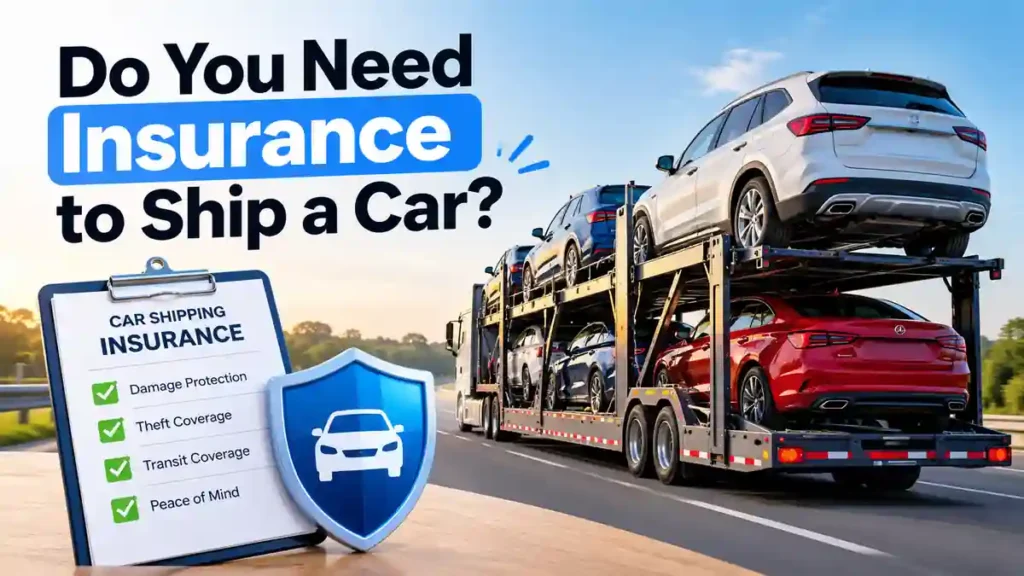
Do you need insurance to ship a car in the United States? Generally, you do not need a separate personal auto insurance policy solely to transport your vehicle using a professional car shipping company. However, you should confirm the transport company’s insurance coverage before booking.
Understanding who pays for damage, what insurance covers, and how to verify a carrier can help you avoid unexpected expenses.
Do You Need Personal Auto Insurance to Ship a Car?
If your vehicle is transported on a truck rather than driven on public roads, you generally do not need personal auto insurance just for the shipping process.
However, your situation matters. If you plan to drive the vehicle before pickup or after delivery, state insurance requirements may apply. If your car is financed or leased, your lender or leasing company may also require continuous coverage.
Before canceling or pausing an existing policy, contact your insurer to understand how doing so could affect your protection.
Who Insures Your Car During Shipping?
Car shipping protection may come from two main sources.
1. The transport company’s insurance
Professional carriers generally carry insurance appropriate to their operations. However, liability insurance and cargo coverage are not the same thing.
- Liability insurance: Generally covers certain injuries or property damage the carrier causes to others.
- Cargo insurance: May cover damage to vehicles or other goods being transported, depending on the policy.
Do not assume that a carrier’s liability policy automatically covers damage to your car. Ask for written confirmation of the applicable coverage.
2. Your personal auto insurance
Your comprehensive or collision coverage may provide protection in certain transport-related situations, depending on your policy’s terms and exclusions.
Contact your insurer before shipping. Ask whether your vehicle remains covered while loaded onto a transport truck, during transit, and during loading and unloading.
Is Car Shipping Insurance Required by Law?
Federal insurance requirements depend on the carrier’s operations, vehicle type, and authority.
According to the Federal Motor Carrier Safety Administration (FMCSA), qualifying interstate, for-hire, non-hazardous property carriers generally face minimum public-liability requirements of $300,000 for vehicles with a gross vehicle weight rating (GVWR) below 10,001 pounds and $750,000 for vehicles rated at 10,001 pounds or more.
These figures are not universal requirements for every car shipping company, and public-liability insurance is not the same as insurance covering damage to your vehicle. Federal rules also do not generally require cargo insurance filings for ordinary property carriers, although different rules can apply to other carrier types and state operations.
Therefore, never assume that legal compliance guarantees sufficient protection for your car.
How to Verify a Car Shipping Company’s Insurance
Before booking, take these steps:
- Request proof of insurance. Ask for a current certificate of insurance and the relevant policy details.
- Check coverage limits. Confirm the maximum amount available for your vehicle and whether limits are shared across multiple vehicles.
- Ask about exclusions. Check coverage for scratches, dents, theft, weather damage, loading, transit, and unloading.
- Confirm the actual carrier. If you book through a broker, identify the company that will physically transport your car.
- Verify carrier information. Use the FMCSA SAFER Company Snapshot to review available company and safety information.
- Get written answers. Keep the shipping agreement and any insurance promises in writing.
A certificate of insurance is useful, but it does not replace the full policy terms.
What If Your Car Is Damaged During Shipping?
Documenting your vehicle’s condition can make a potential claim easier to support.
Before pickup:
- Photograph every side of the car, including existing scratches and dents.
- Remove personal belongings and check the vehicle’s condition.
- Review the inspection report and Bill of Lading.
At delivery:
- Inspect the vehicle carefully before signing the final paperwork.
- Record any new damage on the delivery inspection report.
- Take photographs and notify the carrier promptly in writing.
Contact the appropriate insurer or claims department and follow its reporting instructions. Keep your photos, shipping agreement, inspection reports, and all correspondence.
Open vs. Enclosed Car Shipping: Does Insurance Differ?
Open transport is generally less expensive and exposes your vehicle to normal road and weather conditions. Enclosed transport offers more physical protection from road debris and weather, making it popular for classic, luxury, and high-value vehicles.
However, enclosed transport does not automatically mean better insurance. Compare the actual coverage limits, exclusions, and claim procedures for both options before deciding.
Frequently Asked Questions
Can I ship a car without insurance?
Generally, yes, if it is professionally transported and you are not driving it. Verify carrier coverage and any lender requirements first.
Is my car automatically insured during shipping?
Not necessarily. Ask for written details about coverage, limits, exclusions, and when protection begins and ends.
Does car shipping insurance cover scratches?
It depends on the policy. Document existing damage and ask whether scratches, dents, and loading damage are covered.
Should I keep my personal auto insurance during shipping?
Your existing policy may provide additional protection. Ask your insurer how coverage applies during transport before making changes.
Final Verdict
So, do you need insurance to ship a car? Usually, you do not need a separate personal policy just for professional vehicle transport. But you should never book a carrier without understanding its insurance arrangements.
Verify the actual carrier, review coverage limits and exclusions, document your vehicle’s condition, and keep all shipping records. These simple steps can help protect your vehicle and reduce the risk of an expensive dispute.
Read Also:-Does Car Insurance Pay for Death