
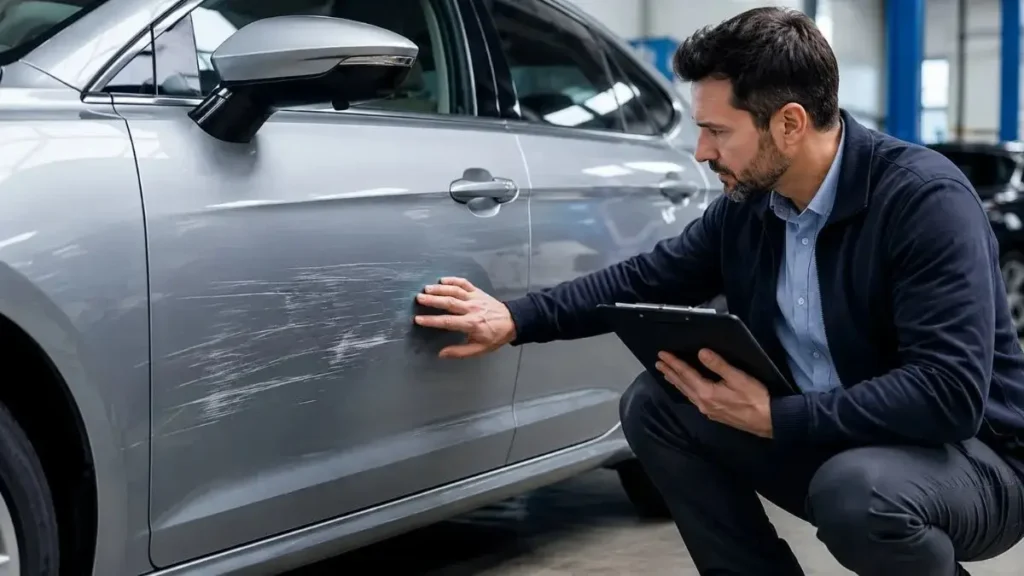
A scratched, chipped, or peeling paint job can make any car look older than it really is. If you’ve recently noticed paint damage, you may be wondering, does car insurance cover paint damage? The short answer is yes—but only if the damage is caused by a covered event. Damage from an accident, vandalism, hail, or a falling tree branch is often covered, while fading, rust, and normal wear and tear usually aren’t. Knowing the difference can help you avoid unnecessary repair costs and decide whether filing an insurance claim is the right move.
Does Car Insurance Cover Paint Damage?
Yes, car insurance can cover paint damage, but only when it results from a covered event. Collision insurance typically pays for paint damage caused by an accident, while comprehensive insurance covers non-collision incidents such as vandalism, hail, fire, or falling objects. However, paint damage caused by aging, rust, fading, peeling, or poor maintenance is generally not covered.
| Cause of Paint Damage | Covered? | Insurance Type |
|---|---|---|
| Car accident | Yes | Collision Coverage |
| Vandalism (keyed car or graffiti) | Yes | Comprehensive Coverage |
| Hail damage | Yes | Comprehensive Coverage |
| Falling tree branch | Yes | Comprehensive Coverage |
| Fire damage | Yes | Comprehensive Coverage |
| Another driver damages your car | Yes | Property Damage Liability |
| Sun fading | No | Not Covered |
| Rust or corrosion | No | Not Covered |
| Peeling paint due to age | No | Not Covered |
| Poor maintenance | No | Not Covered |
When Does Car Insurance Cover Paint Damage?
Paint damage is covered only when it’s linked to a covered loss under your auto insurance policy. The type of insurance that pays depends on how the damage happened.
Collision Coverage
If your vehicle’s paint is damaged during a collision, collision coverage usually pays for the repair after you meet your deductible. This applies whether you hit another vehicle or a stationary object.
Common examples include:
- Hitting another vehicle
- Backing into a pole
- Scraping a garage wall
- Striking a guardrail
- Rolling your vehicle
Example: You accidentally reverse into a concrete pole, leaving deep scratches on your rear bumper. Collision coverage typically pays to repair and repaint the damaged bumper after your deductible.
Comprehensive Coverage
Comprehensive insurance covers paint damage caused by events that are beyond your control. Since these incidents aren’t collision-related, they’re handled under comprehensive coverage instead.
Common covered events include:
- A keyed car
- Graffiti
- Hail damage
- Fire damage
- Falling tree branches
- Storm debris
- Animal scratches
Example: A heavy storm causes a tree branch to fall onto your hood, damaging the paint. Comprehensive insurance generally covers the repair because the damage resulted from a covered non-collision event.
Another Driver Damages Your Car
If another driver is responsible for scratching or damaging your vehicle’s paint, their property damage liability insurance usually pays for the repairs. This includes repainting the affected panels when necessary.
If the driver leaves the scene or doesn’t have insurance, your own collision coverage or uninsured motorist property damage (UMPD)—where available—may help cover the repair costs.
Example: A driver scrapes your parked car while pulling out of a parking space. If they’re identified and found at fault, their insurance should pay for the paint repairs.
When Isn’t Paint Damage Covered?
Car insurance doesn’t cover every type of paint damage. If the damage develops gradually or results from poor upkeep rather than a sudden covered event, you’ll usually have to pay for the repairs yourself.
The following situations are generally not covered:
- Sun fading or UV damage
- Rust or corrosion
- Paint oxidation
- Peeling paint caused by age
- Poor vehicle maintenance
- Manufacturing or factory paint defects
- Faulty paint jobs or body shop workmanship
If the paint failure is caused by a manufacturing defect, your vehicle’s warranty may provide coverage instead of your auto insurance policy.
Should You File an Insurance Claim?
Not every paint scratch is worth an insurance claim. Before contacting your insurer, compare the repair cost with your deductible. If the repair costs less than your deductible, paying out of pocket is often the smarter choice. However, filing a claim can make financial sense when the damage is extensive or repairing your car would be expensive.
| Situation | File a Claim? |
|---|---|
| Repair cost is higher than your deductible | ✅ Yes |
| Deep paint scratches | ✅ Yes |
| Multiple damaged panels | ✅ Yes |
| Minor scratch below your deductible | ❌ Usually No |
| Small cosmetic scuff | ❌ Usually No |
For example, if repairing the paint costs $400 and your deductible is $500, your insurer won’t pay anything. But if repairs cost $2,000, filing a claim could save you a significant amount after your deductible is applied.
How to File a Paint Damage Insurance Claim
If your paint damage is covered, filing a claim is usually a simple process. Taking the right steps early can help prevent delays and improve your chances of a smooth settlement.
- Take clear photos of the damaged area.
- Record when, where, and how the damage happened.
- Contact your insurance company to report the claim.
- Get a repair estimate from an approved body shop.
- Schedule a vehicle inspection if your insurer requests one.
- Pay your deductible if it applies.
- Have the vehicle repaired.
Tip: If your car was keyed or damaged in a hit-and-run, file a police report before contacting your insurer. Some companies may ask for it during the claims process.
Will Insurance Pay to Repaint the Entire Car?
Usually, no. Car insurance is designed to restore your vehicle to its condition before the covered loss—not pay for a complete repaint. In most cases, the insurer only pays to repaint the damaged panels. To ensure the repair looks seamless, the body shop may use paint blending and color-matching techniques so the new paint matches the existing finish. A full repaint is generally approved only when extensive covered damage makes it necessary.
Frequently Asked Questions
Does insurance cover paint scratches?
Yes, if the scratches are caused by a covered event such as an accident, vandalism, or another driver’s negligence. Scratches from everyday wear and tear are usually not covered.
Does comprehensive insurance cover paint damage?
Yes. Comprehensive insurance generally covers paint damage caused by vandalism, hail, fire, falling objects, storm damage, and similar non-collision events.
Does insurance cover faded paint?
No. Paint that fades because of sunlight, age, or oxidation is considered normal wear and tear and isn’t covered by standard car insurance.
Does insurance cover peeling paint?
Usually not. Peeling paint caused by age, poor maintenance, or a manufacturing defect is generally excluded. However, coverage may apply if the peeling results directly from a covered accident.
Conclusion
So, does car insurance cover paint damage? Yes—but only when the damage results from a covered event. Collision insurance generally covers accident-related paint damage, while comprehensive insurance protects against vandalism, hail, fire, and other non-collision incidents. Damage caused by fading, rust, peeling, or poor maintenance is usually excluded. Before filing a claim, compare your repair costs with your deductible and review your policy to determine whether making a claim is the best financial decision.
Read Also:-XIBOR LIMITED Charge on Credit Card