
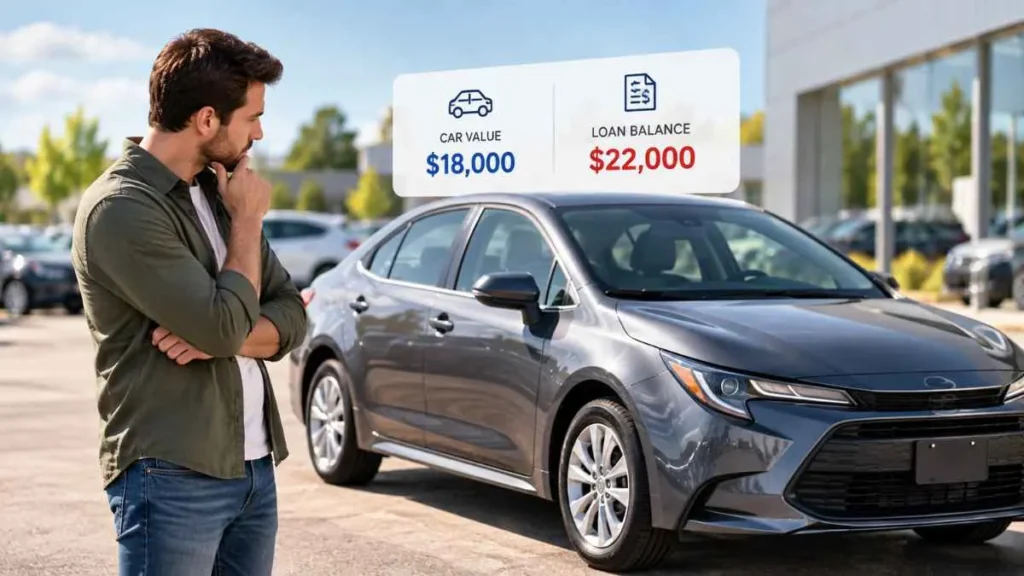
If you’re wondering, is GAP insurance worth it on a second-hand car, the answer depends on how much you owe compared with what your vehicle is worth. If your used car is totaled or stolen while you still have an auto loan, regular auto insurance may pay less than your remaining balance, leaving you with a costly shortfall. GAP insurance may help cover that eligible difference. Here’s how to determine whether it makes sense for you.
What Is GAP Insurance?
GAP stands for Guaranteed Asset Protection. It is an optional product designed to help cover the difference between your covered auto insurance settlement and the amount you still owe on a vehicle loan after a covered total loss or qualifying theft.
For example:
- Loan payoff: $25,000
- Insurance settlement: $20,000
- Potential shortfall: $5,000
If your GAP agreement covers the loss, it may help pay or waive the eligible $5,000 deficiency. However, coverage limits, exclusions, deductible treatment, and other contract terms can affect the actual payout.
GAP is not a replacement for comprehensive or collision insurance. Your primary auto insurance generally handles the vehicle claim first.
Can You Get GAP Insurance on a Used Car?
Yes, in many cases. However, availability depends on the insurer, lender, and specific GAP product. Some providers have restrictions based on vehicle age, mileage, loan status, or when coverage is purchased.
A used car does not automatically need GAP insurance. The more important question is whether your loan payoff is higher than the vehicle’s current value.
For example, owing $23,000 on a car worth $19,000 creates approximately $4,000 in negative equity. That situation may make GAP worth considering.
When Is GAP Insurance Worth It?
GAP insurance may be particularly useful when you have a higher risk of negative equity.
You Made a Small Down Payment
A small down payment means you finance more of the vehicle’s purchase price. If the car depreciates quickly, you may owe more than it is worth.
You Have a Long Loan
A 60-, 72-, or 84-month loan can keep you in debt longer. Your vehicle may lose value faster than your loan balance falls, especially during the earlier years of financing.
You Rolled Negative Equity Into the Loan
Suppose you owe $15,000 on an old car worth $11,000. You have $4,000 of negative equity. If that amount is rolled into your next used-car loan, your new loan starts with additional debt.
This can increase your GAP risk. However, do not assume every GAP agreement covers rolled-over negative equity. Check the contract.
Your Car Has High Mileage or Depreciates Quickly
Higher mileage can reduce a vehicle’s value, while some vehicles depreciate faster than others. Either situation can increase the difference between what you owe and what the car is worth.
You Have a High-Interest Loan
A higher APR can slow principal reduction because more of your payments may initially go toward interest. If the vehicle is also depreciating, negative equity can last longer.
You Could Not Afford a Large Shortfall
Consider what would happen if you suddenly owed $5,000 or $8,000 after a total loss. If paying that amount would seriously strain your finances, GAP may be worth considering as a way to manage that risk.
When Might You Not Need GAP Insurance?
GAP may provide less value if:
- You have substantial positive equity.
- You made a large down payment.
- Your loan is short or nearly paid off.
- Your loan payoff is already below the vehicle’s value.
- You have enough savings to comfortably cover a potential shortfall.
- You purchased the vehicle with cash.
For example, if you owe $15,000 and the vehicle is worth $20,000, you have approximately $5,000 in positive equity. There is no current negative-equity gap to protect.
How Do You Know If You Need GAP Insurance?
Use these three steps:
1. Get your current loan payoff.
Ask your lender for the payoff amount rather than relying on your monthly payment.
2. Estimate your vehicle’s current value.
Use reliable valuation sources, but remember that an online estimate is not necessarily the same as the insurer’s actual total-loss settlement.
3. Compare the numbers.
Loan payoff − vehicle value = potential negative equity
If you owe $21,000 and the vehicle is worth approximately $17,000, your potential negative equity is $4,000.
The actual GAP claim can differ because the primary insurer’s settlement and the GAP agreement determine what is ultimately covered.
How Much Does GAP Insurance Cost?
There is no single price for GAP insurance. Cost can vary based on the provider, vehicle, loan, state, and coverage terms.
You may be able to purchase GAP or similar loan-payoff protection through an insurer, bank, credit union, or dealership.
Before accepting a dealer’s offer, compare the price, coverage limits, exclusions, and cancellation terms with other options. If the GAP cost is added to your financed loan, you may also pay interest on that amount.
What Does GAP Insurance Not Cover?
GAP is not designed to cover everything associated with your auto loan or vehicle. Depending on the agreement, exclusions may include:
- Injuries or liability claims
- Mechanical breakdowns
- Routine maintenance
- Missed payments or late fees
- Certain financed add-ons
- Certain rolled-over negative equity
- Amounts above coverage limits
Some GAP products may also treat deductibles differently, so never assume your deductible is automatically covered.
Is GAP Insurance Required on a Used Car?
GAP insurance is generally an optional product, although a lender or lease agreement may have specific requirements. If a dealer tells you GAP is mandatory, ask them to show you where that requirement appears in your contract.
Also remember that “full coverage” does not automatically include GAP insurance. Comprehensive and collision coverage protect against covered vehicle losses, while GAP addresses an eligible loan shortfall.
Bottom Line: Should You Buy GAP Insurance?
GAP insurance may be worth it on a second-hand car if you owe more than the vehicle is worth and could not comfortably afford the resulting shortfall after a total loss.
It becomes more worth considering with a small down payment, long loan, high interest rate, rolled negative equity, high mileage, or rapid depreciation.
If you already have substantial positive equity or enough savings to handle the risk yourself, GAP may be less valuable.
Ultimately, the best decision comes down to one question:
How much could you owe after a total loss, and can you comfortably afford to pay it yourself?
Read Also:-Can You Drive Without Car Insurance in Texas