
GAP insurance can be worth it on a second-hand car if you owe more on your loan than the car is worth, or could soon. That’s common when you make a small down payment, take a long loan, or roll old debt into the new loan. If you paid cash, made a large down payment, or owe less than the car’s value, you probably don’t need it. Used cars have often already taken their steepest drop in value, so the gap is usually smaller than with a new car, but it can still be real.
Here’s how to decide, and how to avoid overpaying if you buy it.
What GAP Insurance Covers
If your car is totaled or stolen, your auto insurer typically pays its actual cash value, not what you owe. According to the Consumer Financial Protection Bureau (CFPB), guaranteed asset protection (GAP) is an optional product intended to cover the difference between what you owe on your auto loan and what the insurance company pays if your car is stolen or totaled.
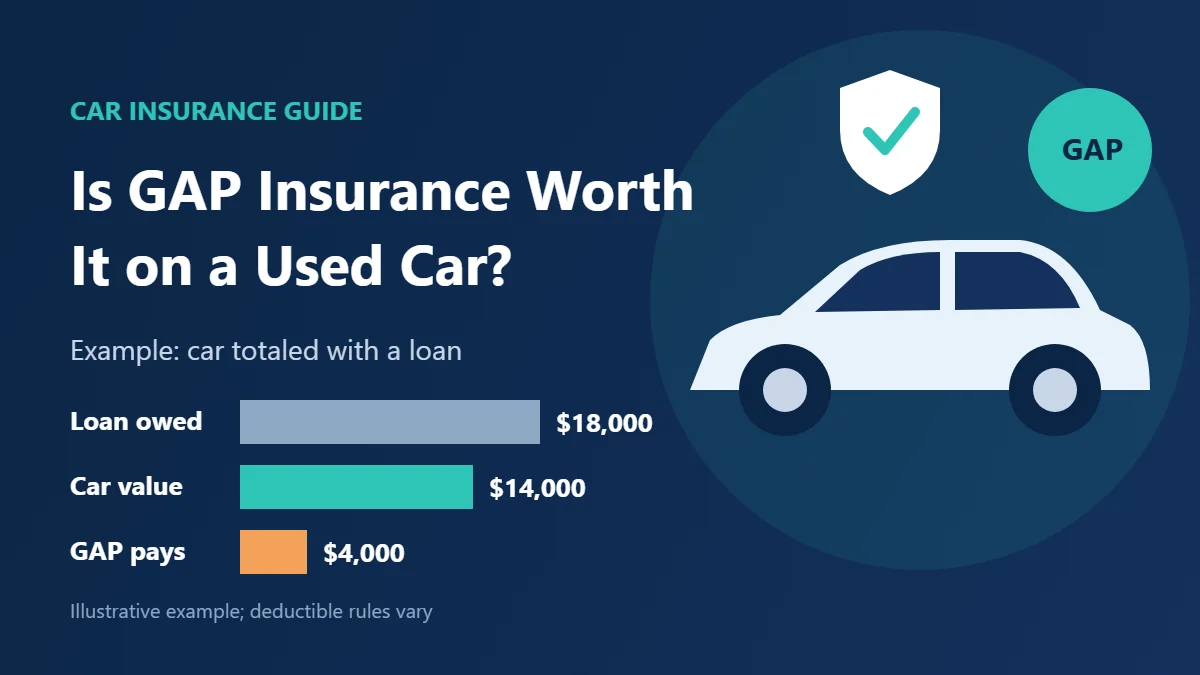
For example, if you owe $18,000 and your car’s value is $14,000, your insurer pays about $14,000, minus your deductible, and you’d still owe the lender roughly $4,000. GAP is designed to cover that shortfall. Whether it also covers your deductible depends on the policy.
When GAP Is Worth It on a Used Car
The Insurance Information Institute (III) says gap coverage makes sense if you:
- Made a down payment of less than 20 percent
- Financed for 60 months or longer
- Bought a vehicle that depreciates faster than average
- Rolled negative equity from an old car loan into the new loan
- Leased the vehicle, since gap coverage is generally required for a lease
III’s guidance is written mainly with new cars in mind, but the same logic applies to used cars. A high interest rate also matters, because your balance falls more slowly, so you can stay “upside down” for longer.
When You Probably Don’t Need It
| Your situation | GAP needed? |
|---|---|
| Paid cash | No |
| Large down payment, owe less than the car is worth | Usually no |
| Short loan, such as 36 months | Usually no |
| Small down payment and a long loan | Often yes |
| Negative equity rolled into the loan | Often yes |
| Savings to cover a few thousand dollars if needed | Maybe not |
How to Check If You’re Upside Down
- Find your loan payoff amount from your lender, not just your remaining payments.
- Estimate your car’s value using a pricing guide or recent sales of similar cars.
- Subtract the value from the payoff. If the result is positive, that’s your gap.
- Recheck every six months or so, since the gap often shrinks as you pay down the loan.
Once you owe less than the car is worth, GAP no longer adds much value.
What GAP Costs and Where to Buy It
Where you buy GAP makes a big difference. III notes that most car insurers offer it and typically charge less than the dealer, and that adding it to an auto policy may cost only about $20 a year. Dealers often sell GAP as a one-time charge rolled into your loan, which means you also pay interest on it.
The CFPB says your own auto insurer may offer GAP, some direct lenders offer it too, and if it’s optional, you can decline it at the dealership. Insurer-sold GAP usually requires you to carry collision and comprehensive coverage, and some insurers limit it to newer vehicles or the original owner, so ask before you buy.
Questions to Ask Before You Buy
- What’s the total price, and is it a one-time charge added to my loan or a small amount added to my premium?
- Does it cover my insurance deductible?
- Is there a maximum payout, such as a percentage of the car’s value?
- Are there vehicle age or mileage limits that could affect a used car?
- How do I cancel, and how is a refund calculated if I pay off or sell the car early?
Get the answers in writing, and compare at least one insurer’s offer with the dealer’s before you sign.
What GAP Doesn’t Cover
GAP usually won’t pay for:
- Repairs to a car that isn’t totaled
- Missed or late loan payments
- Extended warranties, service contracts, or other add-ons rolled into the loan, depending on the policy
- A down payment on your next car
Read the contract to see exactly what’s included.
Can You Cancel GAP or Get a Refund?
Yes, often. The CFPB says you have the right to cancel optional add-on products at any time and that you may be entitled to a refund if you sell, refinance, or prepay your auto loan. Ask the seller or provider how refunds are calculated. Once you’re no longer upside down, canceling can save money.
What Happens Without GAP?
If your car is totaled and you owe more than it’s worth, you’re still responsible for the remaining loan balance. That could mean paying off a car you no longer have while also needing a replacement. If you can’t cover that balance, the lender may send the debt to collections, which can hurt your credit for years. Learn what happens if you wreck a financed car without insurance, and see whether paying off your car lowers insurance.
The Bottom Line
GAP insurance is worth it on a second-hand car when you could owe more than the car is worth, especially with a small down payment, a long loan, or rolled-over debt. If you have plenty of equity or paid cash, skip it. When you do need it, compare your auto insurer’s price with the dealer’s, and cancel it once your loan balance drops below the car’s value.