
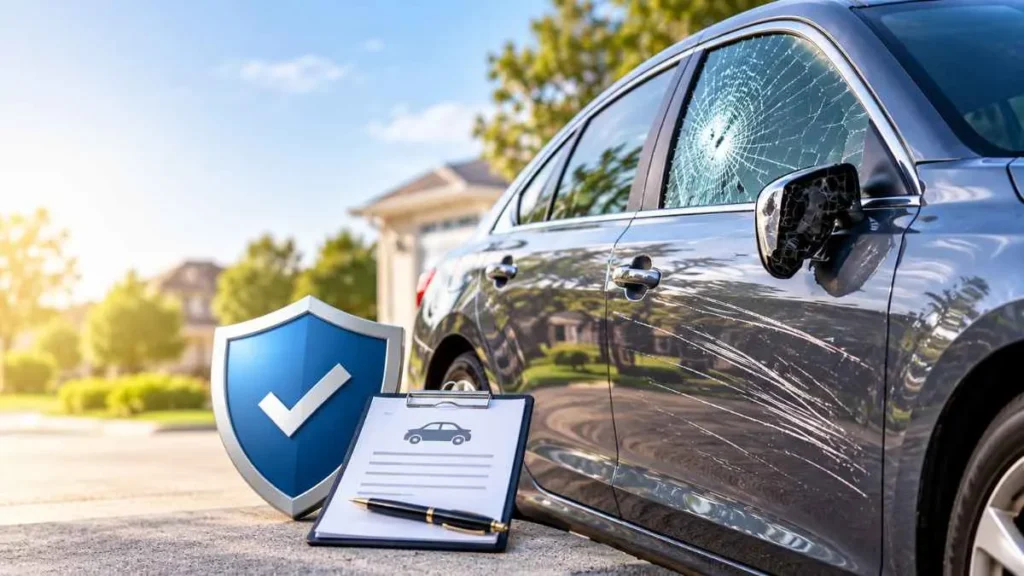
Does car insurance cover criminal damage? In the U.S., it can, depending on how the damage happened and what coverage you have. If someone vandalizes your vehicle by keying the paint, smashing a window, or slashing the tires, comprehensive insurance generally covers the damage, subject to your deductible and policy terms. However, criminal damage is not a specific insurance coverage. The type of incident determines whether comprehensive, collision, liability, or another coverage may apply.
Does Car Insurance Cover Criminal Damage?
Yes, car insurance can cover criminal damage when the loss falls under a covered event. The most common example is vandalism, which is generally covered by comprehensive insurance.
For example, comprehensive coverage may apply if someone:
- Keys or scratches your car
- Slashes your tires
- Breaks your windows
- Spray-paints your vehicle
- Intentionally damages lights or mirrors
- Steals certain vehicle parts
However, not every crime-related incident is considered vandalism. A vehicle damaged during a collision, hit-and-run, theft, or riot may be handled differently.
Your coverage also depends on your policy, deductible, exclusions, state rules, and who caused the damage.
What Type of Insurance Covers Criminal Damage?
Comprehensive Coverage
Comprehensive coverage generally protects your vehicle from qualifying damage that is not caused by a collision. Vandalism, theft, malicious mischief, and certain riot or civil-commotion losses can fall under this coverage.
Comprehensive is generally the coverage to check when someone intentionally damages your parked vehicle.
A deductible usually applies. For example, if covered repairs cost $2,000 and your comprehensive deductible is $500, your potential insurance payment would be $1,500.
Liability Coverage
Liability insurance generally pays for injuries or property damage you cause to other people. It does not normally pay to repair your own car after someone vandalizes it.
If someone keys your vehicle and you only have liability coverage, you would generally have to pay for your own repairs.
Collision Coverage
Collision coverage generally applies when your vehicle is damaged by a collision with another vehicle or object.
Therefore, ordinary vandalism—such as keying, graffiti, or slashed tires—is generally a comprehensive claim rather than a collision claim.
If criminal activity involves an actual crash, however, the situation can be different. The appropriate coverage may depend on who caused the crash, whether the driver was identified, and what coverage is available.
What Types of Criminal Damage May Be Covered?
Common examples include:
Keyed car: Intentional scratches may qualify as vandalism and may be covered by comprehensive insurance.
Slashed tires: Tires intentionally damaged by someone may be covered as vandalism. Normal wear, road hazards, and mechanical problems are different.
Broken windows: A window intentionally smashed during vandalism or a break-in may be covered under comprehensive coverage.
Graffiti: Spray paint and intentional defacement are common examples of vandalism.
Catalytic converter theft: This is generally considered theft rather than ordinary vandalism, but comprehensive coverage may cover a stolen catalytic converter and qualifying related damage.
Vehicle break-in: Comprehensive coverage may cover damage to the vehicle, such as a broken window or damaged lock. Personal belongings stolen from inside the car are generally a separate issue.
What About Items Stolen From Your Car?
Auto insurance generally does not cover personal belongings simply because they were stolen from your vehicle.
For example, if someone breaks your window and steals a laptop:
Broken window → Comprehensive auto insurance may apply
Stolen laptop → Homeowners or renters insurance may potentially apply
Coverage for personal property depends on the applicable homeowners or renters policy, including its limits and deductible.
What If Someone Hits Your Car During a Crime?
Not every criminal act involving your vehicle is vandalism.
If another vehicle hits your parked car during a crime or police pursuit, the loss may involve collision coverage, uninsured motorist coverage, the other driver’s liability insurance, or another applicable coverage.
If your vehicle was stolen and later damaged by the thief, comprehensive coverage may provide protection for covered theft-related damage.
The key question is how the damage actually occurred.
What If You Intentionally Damage Your Own Car?
This is very different from being an innocent victim of vandalism.
If you intentionally damage your own vehicle and falsely report that someone else caused the damage, the insurer may investigate the claim. Intentional-loss exclusions may apply, and deliberately misrepresenting a claim can create serious insurance-fraud consequences.
Criminal activity by the insured does not automatically mean that every type of insurance coverage disappears. The policy language, circumstances, and applicable state law matter.
Does a Vandalism Claim Have a Deductible?
Usually, yes. Your comprehensive deductible generally applies to a covered vandalism claim.
If repairs cost less than your deductible, your insurer generally would not make a payment. This is why it can be useful to compare the repair estimate with your deductible before filing a claim.
For significant damage, filing a claim may make more financial sense.
Can Vandalism Increase Your Insurance Rate?
It may, but a rate increase is not automatic.
The effect can depend on your:
- State
- Insurance company
- Claims history
- Policy
- Previous claims
- Applicable discounts and rating rules
A vandalism claim is not necessarily treated the same as an at-fault collision, but you should not assume it can never affect your insurance costs.
Do You Need a Police Report?
You should generally report suspected vandalism or other criminal damage to law enforcement, especially when the damage is significant.
Many insurers may request or require police documentation when processing vandalism claims. Keep the report or incident number and provide it to your insurer if requested.
However, a police report is not necessarily a legal requirement for every criminal-damage insurance claim in every U.S. state.
What to Do If Someone Damages Your Car
If you discover criminal damage:
- Stay safe and do not confront the suspected offender.
- Photograph and video the damage.
- Look for security-camera footage or witnesses.
- File a police report when appropriate.
- Get a repair estimate.
- Check your comprehensive coverage and deductible.
- Contact your insurer and provide your documentation.
- Keep police reports, photos, estimates, receipts, and claim information.
Criminal Damage vs. Vandalism: Quick Guide
| Situation | Coverage That May Apply |
|---|---|
| Car is keyed | Comprehensive |
| Tires are slashed | Comprehensive |
| Windows are smashed | Comprehensive |
| Car is spray-painted | Comprehensive |
| Catalytic converter is stolen | Comprehensive |
| Car is stolen | Comprehensive |
| Another vehicle hits your car | Collision or other applicable coverage |
| Hit-and-run | Collision, uninsured motorist, or other applicable coverage |
| Riot damages your vehicle | Comprehensive |
| Insured intentionally damages the car | Possible exclusion or denial |
Frequently Asked Questions
Does car insurance cover criminal damage?
Yes, it can. Vandalism caused by another person is generally covered under comprehensive insurance, subject to your deductible and policy terms.
Does liability insurance cover vandalism?
Generally, no. Liability insurance usually does not pay to repair your own vehicle.
Does comprehensive insurance cover a keyed car?
Generally, yes. Keying is commonly considered vandalism and may be covered by comprehensive insurance.
Does insurance cover a broken car window?
Comprehensive coverage may cover a window damaged through vandalism or another covered event.
What if I don’t know who damaged my car?
You may still be able to file a comprehensive claim for covered vandalism even if the offender is unknown.
Will a vandalism claim increase my insurance?
It may, depending on your insurer, state, policy, and claims history. A rate increase is not guaranteed.
Bottom Line
So, does car insurance cover criminal damage? Yes, it can—but the answer depends on the cause of the damage and your coverage.
If someone vandalizes your vehicle, comprehensive insurance is generally the coverage to check first. Liability coverage usually does not protect your own car, while collision coverage generally applies to crash-related damage.
Before filing a claim, document the damage, check your deductible, report the incident when appropriate, and review your policy. Your specific policy and state rules ultimately determine how a criminal-damage claim is handled.
Read Also:-Can You Drive Without Car Insurance in Texas