
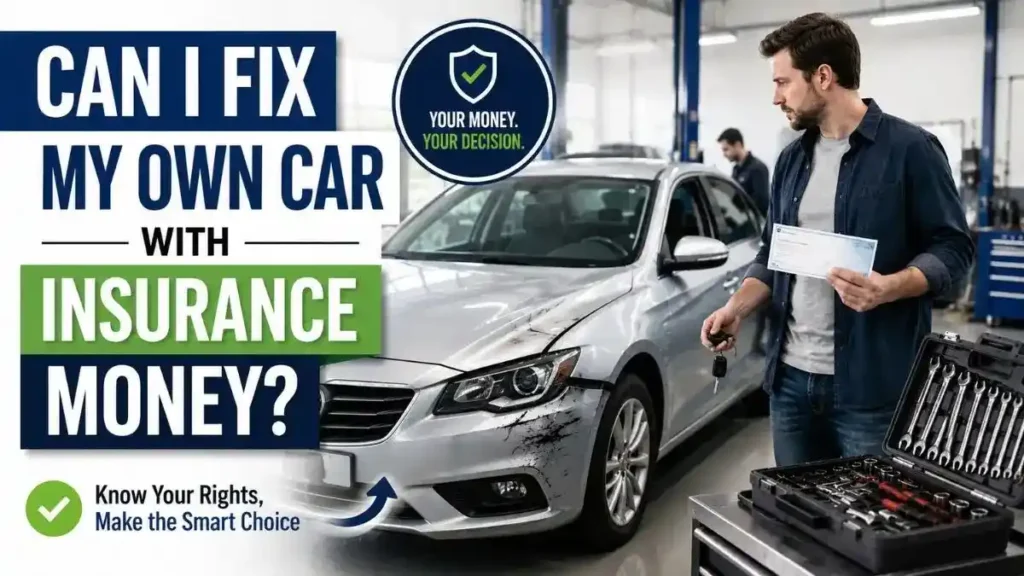
If you’ve recently received an insurance payout, you may be wondering, can I fix my own car with insurance money? The short answer is yes, in many cases you can—but it depends on who owns the vehicle, who receives the insurance payment, and whether your car is financed or leased. While many drivers are free to repair their own vehicles, others may need approval from a lender or leasing company. This guide explains when you can repair your car yourself, keep the insurance money, and avoid costly mistakes.
Note: Insurance laws, policy terms, and lender requirements vary by state and insurer. This article provides general information for U.S. drivers and should not be considered legal or insurance advice.
The Short Answer: Can You Fix Your Own Car With Insurance Money?
Yes, you can often fix your own car with insurance money, but your options depend on your ownership status and how the insurance claim is paid.
| Situation | Can You Repair It Yourself? |
|---|---|
| You own the car outright | Usually Yes |
| Car is financed | Depends on the lender |
| Car is leased | Usually No |
| Insurance pays you directly | Usually Yes |
| Insurance pays the repair shop | No |
| Insurance check is made out to you and your lender | Lender approval usually required |
Key takeaway: If you own your vehicle outright and receive the settlement directly, you generally have the most flexibility.
How Car Insurance Claim Payments Work
Before deciding how to use your insurance money, it’s helpful to understand the claims process.
- File the claim: Report the accident to your insurer.
- Vehicle inspection: An insurance adjuster evaluates the damage.
- Repair estimate: The insurer calculates the covered repair costs and applies your deductible if required.
- Settlement payment: The claim is paid in one of three ways:
- Directly to you: Gives you the greatest flexibility.
- Directly to the repair shop: The shop receives the payment.
- Jointly to you and your lender: Common for financed or leased vehicles.
How the payment is issued often determines whether you can repair the car yourself.
When You Can Repair Your Own Car With Insurance Money
If You Own the Car Outright
If your vehicle has no loan, lease, or lienholder, you can usually decide how the insurance money is used. You may repair the vehicle yourself, hire any mechanic, or leave certain cosmetic damage unrepaired.
Example: If your insurer pays $3,000 and you complete the repairs for $1,000, you can often keep the remaining $2,000.
If the Insurance Check Is Issued Only to You
When the settlement check is made payable only to you, you generally have more freedom to:
- Repair the vehicle yourself
- Hire an independent mechanic
- Choose OEM, aftermarket, or used parts
- Delay cosmetic repairs if appropriate
Always review your settlement documents for any restrictions.
If the Damage Is Cosmetic
DIY repairs are often practical for:
- Small dents
- Surface scratches
- Minor bumper damage
- Paint chips or scuffs
Since these issues usually don’t affect safety, many owners choose lower-cost repairs or postpone them.
When You May Not Be Able to Repair the Car Yourself
Financed Vehicles
If your vehicle is financed, your lender has a financial interest in it. Insurance checks are often issued jointly to you and the lender, and repairs may be required before the funds are released.
Leased Vehicles
With a leased car, the leasing company owns the vehicle. Most lease agreements require accident damage to be professionally repaired to protect the vehicle’s value.
When the Insurance Company Pays the Repair Shop
If the insurer sends payment directly to the repair shop, you generally can’t redirect those funds for DIY repairs.
Can You Keep the Insurance Money Instead of Repairing Your Car?
In many cases, yes—especially if you own the vehicle outright and receive the payment directly.
You can often keep the money if:
- You own the vehicle outright.
- The settlement check is made payable only to you.
- No lender or leasing company is involved.
You may not have that option if:
- The car is financed or leased.
- The payment is issued jointly with your lender.
- The insurer pays the repair shop directly.
Is It Insurance Fraud?
Generally, no. Keeping leftover insurance money isn’t usually fraud as long as your claim was legitimate and you don’t misrepresent damage or attempt to collect payment twice for the same repairs.
What Happens If You Don’t Repair the Damage?
Choosing not to repair your vehicle can have consequences.
- Future claims: Previously paid damage may be treated as pre-existing, reducing future payouts.
- Lower resale value: Unrepaired damage often decreases your vehicle’s market value.
- Safety concerns: Damage involving the frame, suspension, steering, airbags, or brakes should be repaired promptly.
- State requirements: Some states have inspection or roadworthiness rules that may require certain repairs.
DIY Repair vs. Professional Repair
| DIY Repair | Professional Repair |
|---|---|
| Lower repair costs | Higher repair costs |
| May allow you to keep leftover money | Labor warranty included |
| Freedom to choose parts | Better documentation for claims |
| Good for cosmetic repairs | Best for structural or safety-related damage |
Best choice: DIY repairs can save money on minor cosmetic damage, while professional repairs are usually recommended for major accidents, financed vehicles, and safety-related damage.
Common Mistakes to Avoid
Avoid these common errors after receiving an insurance settlement:
- Spending the settlement before reviewing lender requirements.
- Ignoring hidden damage.
- Failing to document DIY repairs.
- Using poor-quality replacement parts.
- Assuming future claims will cover existing damage.
- Not reviewing your insurance policy or loan agreement.
Frequently Asked Questions
Can I cash my insurance settlement check?
Yes, if it’s made payable only to you. If it’s a joint check with your lender, you’ll usually need the lender’s endorsement.
Can I use the insurance money for something else?
Often yes, if you own the vehicle outright. Financed and leased vehicles may have restrictions.
Can I repair only part of the damage?
Yes. However, future claims generally won’t pay again for damage that has already been compensated.
Will my insurance company know if I don’t repair my car?
Possibly. Insurers keep claim records, photos, and damage estimates that may affect future claims.
What if repairs cost more than the estimate?
You may be able to request a supplemental payment if hidden damage is discovered and properly documented.
Key Takeaways
- You can often repair your own car if you own it outright.
- Financed and leased vehicles usually have lender or lease requirements.
- Insurance checks issued jointly with a lender typically require approval before funds can be used.
- You may be able to keep leftover insurance money if your settlement allows it.
- Always review your insurance policy and loan or lease agreement before making repair decisions.
Conclusion
So, can I fix my own car with insurance money? In many situations, yes. If you own your vehicle outright and receive the insurance settlement directly, you can usually repair the car yourself, hire any mechanic you choose, or even keep leftover funds after completing the repairs. However, if your vehicle is financed or leased, your lender or leasing company may require the repairs to be completed before the insurance money can be used freely. Reviewing your insurance policy, settlement details, and financing agreement before making a decision can help you avoid unexpected costs and future claim issues.
Read Also:-Can a Car Insurance Company Refuse to Pay a Claim