
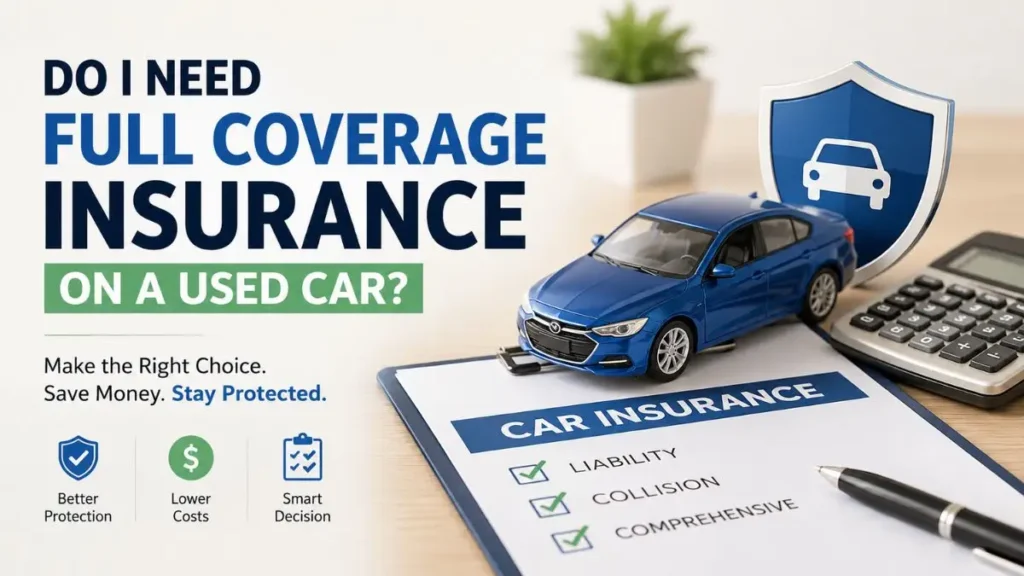
If you’re wondering, do i need full coverage insurance on a used car, you’re not alone. Many drivers aren’t sure whether paying for full coverage is worth the extra cost or if liability insurance is enough. The answer depends on your car’s value, whether it’s financed, and your financial situation. Choosing the right coverage can help you avoid unnecessary premiums while protecting yourself from expensive repairs or replacement costs. In this guide, you’ll learn when full coverage makes sense, when you can safely consider liability-only insurance, and how to make the best decision for your budget and driving needs.
What Is Full Coverage Insurance?
Before deciding whether full coverage is right for your used car, it’s important to understand what it actually means. Despite its name, full coverage insurance isn’t a separate policy. Instead, it’s a combination of coverages that provides broader financial protection than basic liability insurance.
Most full coverage policies include:
| Coverage | What It Covers |
|---|---|
| Liability Insurance | Pays for injuries and property damage you cause to others in an accident. |
| Collision Coverage | Pays to repair or replace your car after a collision, regardless of who caused it. |
| Comprehensive Coverage | Covers non-collision damage such as theft, fire, vandalism, hail, floods, falling objects, and animal collisions. |
While full coverage protects your vehicle in many situations, it doesn’t cover everything. Mechanical failures, routine maintenance, and normal wear and tear are generally excluded.
Do You Need Full Coverage Insurance on a Used Car?
No, you do not always need full coverage insurance on a used car. If your vehicle is financed or leased, your lender will usually require collision and comprehensive coverage until the loan or lease is paid off. However, if you own the car outright, the decision depends on its current market value, insurance premium, deductible, and your ability to replace the vehicle after a major loss.
There is no one-size-fits-all answer. For a newer or high-value used car, full coverage often provides valuable financial protection because repairs or replacement can be expensive. On the other hand, if your car has a low market value and you could comfortably replace it yourself, liability-only insurance may be a smarter financial choice.
A simple rule is to compare your car’s current value with the annual cost of full coverage. If you’re paying a large percentage of the vehicle’s value every year, it may be time to review your coverage options.
When Full Coverage Is Worth It
Although full coverage isn’t necessary for every used car, there are several situations where keeping it is a wise financial decision.
Your Car Is Financed
If you’re still making loan payments, your lender will usually require you to maintain collision and comprehensive coverage. Removing these coverages could violate your loan agreement and may result in the lender purchasing expensive force-placed insurance on your behalf.
Your Car Is Leased
Lease agreements almost always require full coverage because the leasing company owns the vehicle until the lease ends.
Your Used Car Still Has Significant Value
A used vehicle can still be worth thousands of dollars. If replacing or repairing it would create a financial burden, full coverage helps protect that investment.
You Don’t Have Emergency Savings
If paying for another vehicle out of pocket would be difficult, full coverage provides valuable peace of mind by helping cover unexpected losses.
Your Vehicle Has Expensive Repair Costs
Many modern used cars include advanced safety systems, cameras, and sensors that make repairs costly. Full coverage helps reduce those unexpected expenses after a covered accident.
When You Can Consider Liability-Only Insurance
Full coverage isn’t always the most cost-effective option. If your vehicle has a low market value and you could afford to repair or replace it yourself, switching to liability-only insurance may help you lower your annual insurance costs.
Your Car Is Paid Off
Once your loan is paid off, you’re no longer required by a lender to carry collision and comprehensive coverage. This gives you the freedom to choose the coverage that best fits your financial needs.
Your Car Has a Low Market Value
As cars age, they depreciate. If your used car is worth only a few thousand dollars, paying high premiums for full coverage may not provide enough value.
Full Coverage Is Too Expensive
If the annual premium is a large percentage of your car’s value, it may be worth reviewing your options.
You Can Afford to Replace the Vehicle
If you have enough savings to replace your car after a total loss, liability-only insurance could be a practical choice.
5 Questions to Ask Before Dropping Full Coverage
Before removing collision or comprehensive coverage, ask yourself these questions:
- ✔ Is my car fully paid off?
- ✔ What is my car’s current market value?
- ✔ Could I afford to replace my car without insurance?
- ✔ How much money would I actually save?
- ✔ What deductible would I pay if I filed a claim?
Answering these questions can help you decide whether keeping full coverage is worth the extra premium.
Full Coverage vs. Liability Insurance
| Feature | Full Coverage | Liability Only |
|---|---|---|
| Covers your own car | ✅ Yes | ❌ No |
| Covers injuries and property damage to others | ✅ Yes | ✅ Yes |
| Monthly premium | Higher | Lower |
| Best for | Financed, leased, or valuable vehicles | Older, low-value, paid-off vehicles |
While liability insurance satisfies legal requirements in most states, full coverage offers much greater financial protection for your own vehicle.
Common Mistakes to Avoid
Many drivers spend more than necessary—or leave themselves underinsured—because of these common mistakes:
- Assuming full coverage is legally required for every used car.
- Dropping collision and comprehensive coverage without checking the vehicle’s Actual Cash Value (ACV).
- Ignoring the deductible when comparing policies.
- Choosing the cheapest premium instead of considering the financial risk of replacing the vehicle.
Frequently Asked Questions
Is full coverage required by law?
No. Most states require only liability insurance. However, lenders usually require full coverage for financed or leased vehicles.
Can I remove full coverage after paying off my loan?
Yes. Once your loan is paid off, you can decide whether to keep or remove collision and comprehensive coverage based on your vehicle’s value and financial situation.
Is liability insurance enough for a used car?
It can be if your car is paid off, has a low market value, and you can afford to repair or replace it after an accident.
Is full coverage worth it on a 10-year-old car?
It depends on your car’s value, repair costs, insurance premium, and your ability to replace the vehicle. Older cars with low values may not justify the cost of full coverage.
Does full coverage cover engine failure?
No. Full coverage does not cover mechanical breakdowns, engine failure, routine maintenance, or normal wear and tear. It protects against covered events such as accidents, theft, fire, vandalism, and severe weather.
Conclusion
There isn’t a one-size-fits-all answer to do i need full coverage insurance on a used car. The right decision depends on your loan status, your car’s current value, the cost of your insurance premium, and your financial ability to replace the vehicle after a major loss. If your car is financed, full coverage is usually required. If it’s paid off, compare the potential insurance payout with the annual premium before making a decision. Taking time to compare quotes and review your options can help you find the right balance between protection and affordability.