
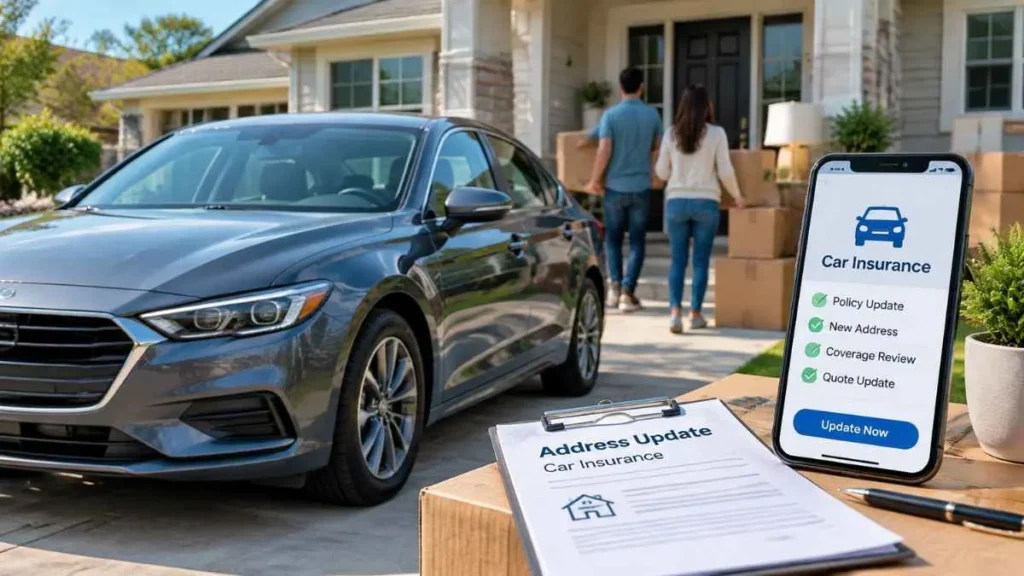
Does moving impact car insurance? Yes, moving to a new home can affect your auto insurance rates and policy requirements. When you change your address, insurance companies evaluate factors such as your new ZIP code, driving habits, commute distance, vehicle location, and state insurance laws. Your premium may increase, decrease, or remain the same depending on your new location and overall risk profile.
Understanding how moving affects car insurance can help you avoid unexpected rate changes and make sure your policy continues to provide the right coverage.
Why Does Moving Affect Your Car Insurance Rate?
When you move, your insurance company may recalculate your premium because your risk factors can change. Insurers do not only look at your driving record and vehicle; they also consider where you live, where your car is parked, and how much you drive.
A new location can affect your insurance cost because every area has different levels of risk.
Your New ZIP Code and Location Risk
Your ZIP code is one of the important factors used by insurance companies when calculating car insurance rates. Different areas have different risks based on local conditions and claim history.
Insurers may consider:
- Accident frequency: Areas with more accidents may have higher insurance costs because they generate more claims.
- Vehicle theft rates: Locations with higher theft rates may increase comprehensive coverage costs.
- Vandalism risks: Areas with more vehicle damage claims can affect premiums.
- Traffic conditions: Busy roads and crowded areas may increase accident exposure.
- Local claims history: Past claims in your area can influence how insurers calculate risk.
For example, moving from a rural area to a busy city may increase your premium because of higher traffic and accident risks. However, moving from a city to a safer suburb may help reduce your insurance costs.
How Does Your Commute Affect Car Insurance After Moving?
Your daily driving habits can also impact your insurance premium. Insurance companies consider how often and how far you drive because more time on the road can increase your accident exposure.
Your premium may change if:
- Your commute becomes longer: More miles driven each year may increase your risk level.
- Your commute becomes shorter: Less driving may reduce your exposure and could lower your premium.
- Your annual mileage changes: A significant increase or decrease in mileage can affect your rate.
Example:
Before moving:
- Daily commute: 5 miles
After moving:
- Daily commute: 30 miles
A longer commute means more time spent driving, which may influence your insurance cost.
Does Your Parking Location Affect Car Insurance?
Yes. Insurance companies consider your garaging address, which means where your vehicle is normally parked or stored.
Your parking location can affect your risk because insurers consider factors such as:
- Theft risk
- Weather-related damage
- Local accident patterns
- Vehicle safety
Your mailing address and garaging address may not always be the same. For example, you may receive mail at one location, but your car may be regularly parked somewhere else.
Providing accurate information about where your vehicle is kept helps ensure your policy reflects your actual situation.
Can Moving Increase Your Car Insurance Premium?
Yes, moving can increase your car insurance premium, but it depends on your new location and circumstances.
Your rate may increase if you move to an area with:
- Higher traffic levels
- More vehicle theft
- More accidents
- Higher repair costs
- Different insurance requirements
Example:
A driver moving from a small town to a major city may pay more because the new location could have higher accident and theft risks.
However, moving does not always increase insurance costs. Some drivers may see lower premiums after moving to safer areas with fewer claims and less traffic.
Does Moving Within the Same State Affect Car Insurance?
Yes, even moving within the same state can change your car insurance rate.
A local move may affect your premium because of:
- A new ZIP code
- Different neighborhood risks
- Changes in parking conditions
- Local claims data
For example, moving from one neighborhood to another in the same city may still change your premium if the new area has different accident or theft rates.
Does Moving to Another State Change Car Insurance?
Moving to another state can have a bigger impact on your insurance because each state has different insurance laws and coverage requirements.
Your new state may have different rules for:
- Minimum liability limits
- Personal Injury Protection (PIP)
- Uninsured or underinsured motorist coverage
For example, moving from California to Texas or Florida to Georgia may require you to update your policy to meet the new state’s requirements.
Your insurance company may need to rewrite or adjust your policy after an interstate move.
What Happens If You Don’t Update Your Address?
Failing to update your address after moving can create problems because your policy information may no longer match your actual situation.
Possible issues include:
- Incorrect policy information
- Claim complications
- Coverage concerns
- Premium adjustments
Insurance companies need accurate information about where your vehicle is primarily located to calculate your risk correctly.
How Soon Should You Update Car Insurance After Moving?
After moving, you should update your insurance information as soon as possible.
Follow these steps:
- Inform your insurance company about your new address.
- Review your policy details and coverage limits.
- Update your vehicle registration if required.
- Check state deadlines for insurance, registration, and driver’s license updates.
Requirements can vary depending on your state.
How to Save Money on Car Insurance After Moving
Moving is a good time to review your insurance options. You can potentially save money by:
- Comparing quotes from different insurers
- Reviewing your coverage limits
- Updating your annual mileage
- Asking about available discounts
- Choosing coverage that matches your current needs
Frequently Asked Questions
Does moving impact car insurance?
Yes, moving can impact car insurance because insurers consider your new location, ZIP code, driving habits, and state requirements when calculating risk.
Does changing my address increase car insurance?
Changing your address can increase, decrease, or have no effect on your premium depending on your new location and risk factors.
Can moving lower my car insurance premium?
Yes. Moving to a safer area with fewer accidents, lower theft rates, or a shorter commute may reduce your insurance costs.
Do I need to tell my insurance company if I move?
Yes. Updating your insurer helps ensure your policy information is accurate and your coverage remains valid.
Final Thoughts
Moving can impact your car insurance because your location plays an important role in how insurers calculate risk. A new address can change your premium based on factors like your ZIP code, commute distance, parking location, traffic conditions, and state insurance rules.
Your rate may increase, decrease, or stay the same after moving. The best approach is to update your insurance company, review your coverage, and compare options to make sure your policy still fits your needs after relocation.
Read Also:-Is a Honda Civic Considered a Sports Car for Insurance