
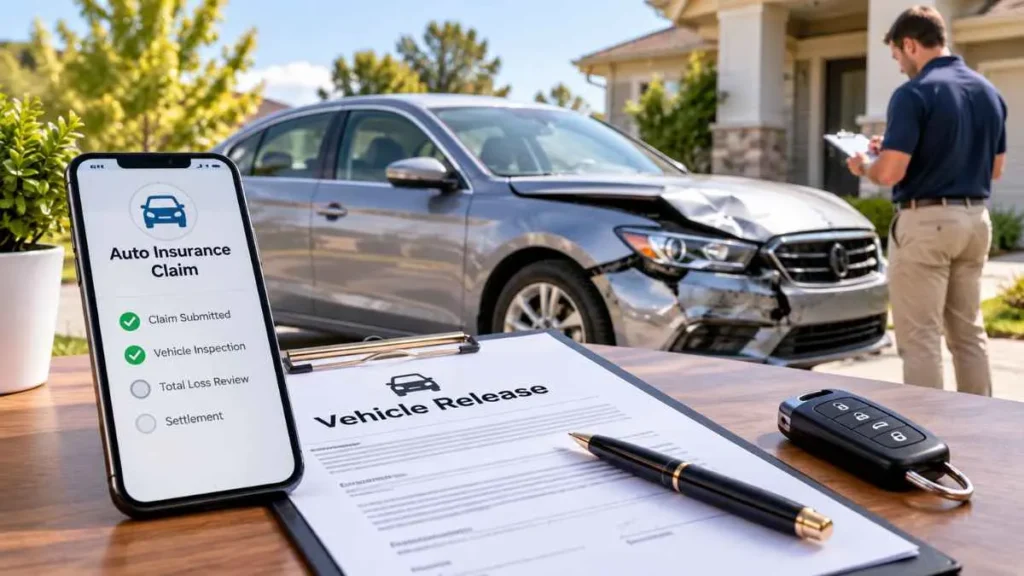
After an accident, your insurer may declare your car a total loss and ask you to release it before the final settlement is completed. So, should I release my car to the insurance company?
There is no universal answer. In many total-loss claims, releasing the vehicle allows the insurer to move it and can help prevent additional storage costs. However, releasing the car is not necessarily the same as accepting the insurer’s valuation. Your policy, state law, storage situation, and the document you sign all matter.
What Does It Mean to Release Your Car?
Releasing your car usually means allowing the insurer or its authorized company to take possession of the damaged vehicle and move it from a tow yard, body shop, or storage facility.
The vehicle may be moved to a salvage yard or another storage location. Before agreeing, ask where the car is going, who is responsible for current storage charges, and when those charges will stop.
Vehicle Release vs. Settlement
A vehicle release does not necessarily mean you accept the insurance company’s settlement offer.
These can be separate steps:
Total loss → Vehicle moved → Valuation → Settlement → Title transfer
The exact order varies by insurer, claim, policy, and state.
Most importantly, read the document before signing it. A “release” could refer to vehicle pickup, title transfer, settlement, or a broader legal release.
Why Does the Insurance Company Want My Car Released?
To Reduce Storage Fees
Tow yards and body shops may charge daily storage fees. Moving a totaled vehicle can prevent additional charges from building up.
Travelers states that releasing a total-loss vehicle allows it to be moved and can help avoid additional storage fees.
To Move the Car to a Salvage Facility
After a total-loss decision, the insurer may move the vehicle to a salvage facility for storage, inspection, auction, or other processing.
If you want to keep the vehicle, tell the insurer before releasing it because owner-retained salvage can change the settlement and title process.
To Complete the Claim
Moving the vehicle can help with inspection, salvage processing, and ownership or title requirements. The exact procedure varies by insurer and state.
Should I Release My Car Before the Settlement?
Releasing the vehicle may make sense if:
- It has already been declared a total loss.
- It is sitting at a facility charging daily storage.
- You do not want to keep the car.
- The insurer is moving it to a lower-cost or storage-free facility.
- You understand what the release document authorizes.
Slow down if:
- You want to keep the vehicle.
- You disagree with the valuation.
- You are being asked to sign the title.
- You are signing a settlement agreement or legal release.
- You do not understand the paperwork.
The key question is what exactly are you releasing?
What Happens If I Refuse to Release the Vehicle?
Refusing to release the car can have practical consequences. Storage charges may continue, and the claim could take longer if the insurer needs the vehicle moved or inspected.
Your policy may also contain cooperation requirements. However, refusing a vehicle-release request does not automatically mean your claim will be denied. The outcome depends on the policy, claim type, and state law.
Ask the adjuster why the vehicle must be released and what happens if you wait.
What If My Car Is at a Tow Yard or Body Shop?
Ask these questions:
- What is the daily storage rate?
- Who is responsible for the current charges?
- When do storage charges stop?
- Where will the vehicle be taken?
- Will the new facility charge storage?
For example, $50 per day × 20 days = $1,000. A delay can therefore become expensive.
If the car is at your home and there are no storage charges, there may be less urgency. Still, keep it available for inspection and ask why the insurer wants it moved.
What If I Want to Keep My Totaled Car?
You may be able to keep a totaled vehicle depending on your state’s rules and the claim circumstances. This is commonly called owner-retained salvage.
If you keep the vehicle, the insurer may deduct its salvage value from the settlement. For example:
Vehicle value: $20,000
Salvage value: $4,000
Potential settlement: $16,000
Actual calculations vary by state and claim.
Keeping a totaled vehicle may also result in a salvage or rebuilt title and additional DMV requirements. Washington’s insurance regulator, for example, explains that salvage value can be deducted when an owner keeps a totaled vehicle.
What If I Disagree With the Insurance Valuation?
Ask for the total-loss valuation report and check:
- Mileage
- Trim level
- Options
- Vehicle condition
- Prior damage
- Comparable vehicles
- Custom equipment
- Recent upgrades
You can provide local comparable listings, dealer information, receipts, and maintenance records when challenging an inaccurate valuation.
Some policies also contain an appraisal process. Washington’s insurance regulator recommends requesting the valuation report when reviewing a total-loss offer.
What Should I Ask the Adjuster Before Releasing My Car?
Before signing, ask:
- Where will my car be taken?
- Who pays the current storage bill?
- When do storage charges stop?
- Does releasing the car affect my settlement?
- Can I still dispute the valuation?
- Am I transferring the title?
- Am I accepting a settlement?
- Am I signing a legal release?
- Can I get a copy of everything I sign?
- What happens if I want to keep the car?
If an answer is unclear, request written clarification.
What Should I Remove Before the Car Is Picked Up?
Remove:
- Personal documents
- Electronics
- Chargers
- Valuables
- Toll transponders
- Garage openers
- Spare keys
- Parking permits
- Work or school IDs
- Personal papers
Also remove personal information from the vehicle’s infotainment system when possible.
Take photos of the exterior, interior, odometer, damage, and important equipment before pickup.
What About My Car Loan and GAP Insurance?
A total loss does not automatically eliminate your auto loan. If your loan balance is higher than the insurance payout, you may still owe the difference.
For example:
Insurance payout: $20,000
Loan balance: $24,000
Potential difference: $4,000
GAP coverage may cover some or all of that difference, depending on the contract. The CFPB explains that GAP is an optional product designed to cover the gap between what you owe and what insurance pays after a covered total loss.
Frequently Asked Questions
Can I release my car before accepting the settlement?
Often, yes, but it depends on the claim and paperwork. Confirm that the vehicle release does not itself accept the settlement.
Does releasing my car mean I accept the insurer’s offer?
Not necessarily. Vehicle release and settlement acceptance can be separate steps.
Can I refuse to release my totaled car?
You may be able to delay release, but storage costs or cooperation issues may arise. Check your policy and ask the insurer about the consequences.
Can I keep my totaled car?
Possibly. State law and the insurer’s process determine whether owner-retained salvage is available.
Should I sign the title before receiving payment?
Do not assume you should. Understand when ownership transfers and what the document means before signing.
Bottom Line: Should You Release Your Car?
If you do not want the totaled vehicle, releasing it may be practical, especially when storage fees are accumulating.
If you want to keep the car, discuss owner-retained salvage before releasing it.
If you do not understand the paperwork, stop and ask questions before signing a title, settlement agreement, or legal release.
The important issue is not simply whether you release the car. It is understanding what you are releasing, what you are signing, who pays storage costs, and whether you are giving up ownership or claim rights.
Read Also:-Is Act of God Covered by Car Insurance