
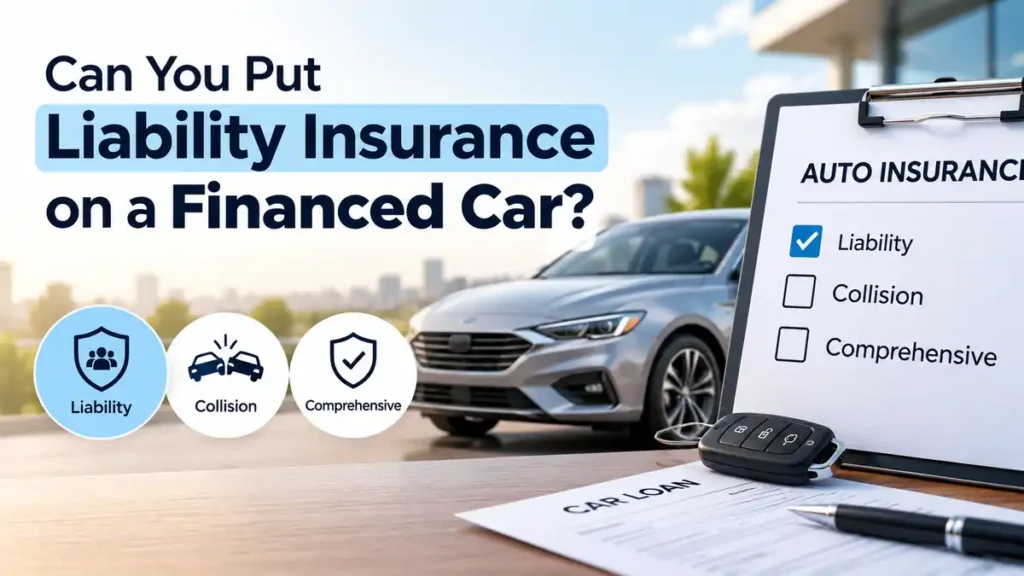
Can you put liability insurance on a financed car? Yes, an insurer may offer you liability-only coverage, but it usually won’t meet your lender’s requirements. Most lenders require collision and comprehensive coverage to protect their financial interest in your vehicle. Dropping required coverage could lead to force-placed insurance, additional costs, or other consequences under your loan agreement. Understanding these rules can help you avoid expensive surprises and find affordable insurance without violating your financing terms.
Can You Have Liability-Only Insurance on a Financed Car?
You may be able to purchase liability-only insurance, but your lender will typically require additional coverage while you repay your auto loan. Your financing agreement determines the specific requirements.
Liability insurance covers eligible injuries or property damage you cause to others, subject to your policy limits. It generally does not pay to repair your own car. Because your vehicle serves as collateral for the loan, lenders usually require collision and comprehensive coverage as well.
Even if your state allows liability-only insurance, that does not mean it satisfies your lender’s requirements.
What Insurance Coverage Is Required for a Financed Car?
Most lenders require the following types of coverage:
Liability Insurance
Liability insurance helps cover injuries or property damage you cause to others in an accident, up to your policy limits. It generally does not cover damage to your own vehicle.
Collision Coverage
Collision coverage helps pay for covered damage to your car after an accident involving another vehicle or an object. Your deductible and policy terms determine how much you pay out of pocket.
Comprehensive Coverage
Comprehensive coverage helps pay for covered non-collision losses, such as theft, hail, fire, and vandalism. Lenders typically require it to protect their financial interest in the financed vehicle.
The term full coverage commonly refers to liability, collision, and comprehensive insurance combined. It is an informal term, not a standardized insurance product.
What Happens If You Drop Full Coverage on a Financed Car?
If your lender requires collision and comprehensive coverage, removing them without approval may violate your loan agreement.
Your Lender May Add Force-Placed Insurance
If required coverage lapses, your lender may purchase force-placed insurance, also called collateral protection insurance (CPI), to protect its interest in the vehicle. The cost may be added to your loan payments as permitted by your agreement.
This coverage can be expensive and may not provide the same protection as a standard auto insurance policy. Contact your lender if you receive a notice about missing coverage.
Could Your Car Be Repossessed?
Insufficient insurance may violate your loan agreement, potentially leading to further enforcement action. However, repossession is not automatic in every case. The consequences depend on your contract and applicable law.
You May Have to Pay for Vehicle Damage
Liability-only insurance generally will not cover repairs to your own car. If your financed vehicle is damaged in an accident and no other applicable coverage pays for the loss, you may have to pay for repairs while continuing to make your loan payments.
What Happens If a Financed Car Is Totaled?
If your car is totaled, your outstanding loan does not automatically disappear.
For example, suppose you owe $24,000 on your car, but its actual cash value is $20,000. That leaves a potential $4,000 shortfall before applicable deductibles and other adjustments.
If you have applicable collision or comprehensive coverage, depending on the cause of the loss, your insurer may pay the covered actual cash value, subject to your policy terms and deductible. Without applicable coverage, you could remain responsible for the loan balance without having a usable vehicle.
Can GAP Insurance Help?
Guaranteed Asset Protection (GAP) insurance may cover some or all of the eligible difference between your vehicle’s covered value and your outstanding loan balance after a qualifying total loss. However, GAP insurance does not replace collision or comprehensive coverage and has its own limitations.
How to Lower Insurance Costs on a Financed Car
If your premiums are too expensive, consider these options before dropping required coverage:
- Compare quotes: Get prices from multiple insurers using the same coverage limits and deductibles.
- Ask about discounts: Check eligibility for safe-driver, low-mileage, and multi-policy discounts.
- Consider a higher deductible: This may lower premiums, but confirm your lender’s deductible limits and choose an amount you can afford.
- Review optional benefits: Consider whether rental reimbursement or roadside assistance is worth the additional cost.
- Contact your lender: Confirm the exact coverage requirements before changing your policy.
What If You Already Have Liability-Only Insurance?
If your car is financed and you currently have liability-only coverage, take these steps:
- Review your loan agreement for insurance requirements.
- Check your policy declarations page to confirm your active coverage.
- Contact your insurer and lender to identify any missing coverage.
- Arrange the required insurance promptly if necessary.
- If force-placed insurance charges appear, request a breakdown and ask how to have them reviewed after providing acceptable proof of coverage.
Keep copies of your insurance documents and communications.
Frequently Asked Questions
Can I legally drive a financed car with liability-only insurance?
Your state may permit liability-only insurance, but your lender may require collision and comprehensive coverage under your loan agreement.
Can I have liability-only insurance on a used financed car?
Possibly, if an insurer offers it, but your lender may still require collision and comprehensive coverage regardless of the car’s age.
Can I switch to liability-only insurance after paying off my car?
Generally, yes. Once the loan is paid off, the lender’s contractual coverage requirements usually end. Consider whether you could afford to repair or replace your vehicle yourself.
Does GAP insurance replace full coverage?
No. GAP insurance may cover an eligible loan shortfall after a qualifying total loss, but it does not replace collision or comprehensive insurance.
Final Verdict
You may be able to purchase liability-only insurance on a financed car, but it usually will not satisfy a lender that requires comprehensive and collision coverage. Before changing your policy, review your loan agreement and confirm your lender’s requirements. Comparing quotes, asking about discounts, and choosing an approved deductible can help you save money while maintaining the protection your financing agreement requires.
Read Also:-Does Car Insurance Cover Hurricane Damage