
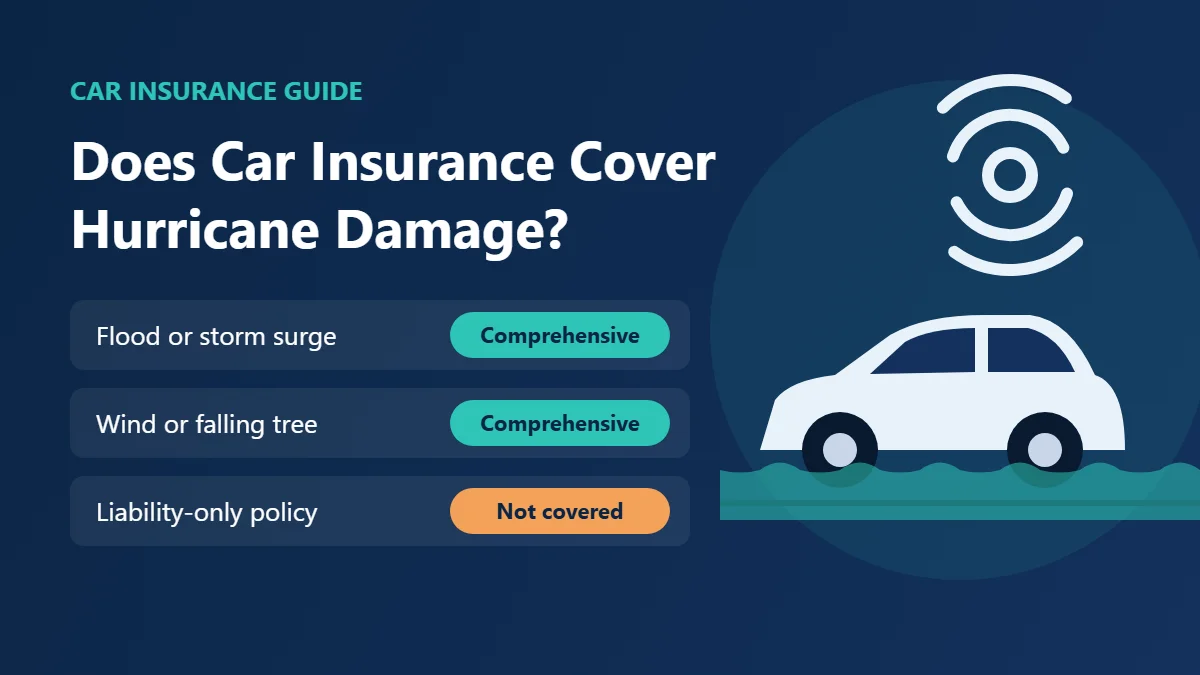
Yes, if you have comprehensive coverage. Comprehensive pays for hurricane damage to your car from wind, flooding, storm surge, hail, and falling trees or debris, minus your deductible. If you carry only liability insurance, hurricane damage to your own car isn’t covered, and you’ll pay for repairs or a replacement yourself.
Here’s what’s covered, what to do if your car floods, how insurers decide whether it’s totaled, and how to prepare before the next storm.
Hurricane Damage Coverage at a Glance
| Type of hurricane damage | Coverage that usually pays |
|---|---|
| Flooding or storm surge | Comprehensive |
| Wind damage, such as broken windows | Comprehensive |
| A tree or flying debris hits your car | Comprehensive |
| Hail damage | Comprehensive |
| You crash into another car or object while evacuating | Collision |
| Any damage to your own car with liability-only coverage | Not covered |
Comprehensive Is the Coverage That Matters
Hurricane damage almost always falls under comprehensive coverage, sometimes called “other than collision.” The National Association of Insurance Commissioners explains that comprehensive pays for damage that isn’t caused by a collision, including windstorm, flood, hail, and fire.
That includes storm surge. According to the Insurance Information Institute, flood damage to vehicles, including flooding from a storm surge, is covered if you’ve purchased comprehensive coverage.
Comprehensive is optional in every state. If your car is financed or leased, your lender almost certainly requires it. If you own your car outright, check your declarations page, because liability-only policies leave you with no protection against storm damage.
Your homeowners policy won’t fill the gap. Home and flood policies are designed for your house and belongings, while damage to your car is handled by your auto policy. For more, see whether homeowners insurance covers car damage in a driveway.
What to Do If Your Car Floods
Water damage gets worse with time and with the wrong next step. The Texas Department of Insurance offers practical guidance:
- Don’t try to start the car. Experts recommend having a mechanic inspect a flooded car first to avoid more damage. Drying it out is best left to a professional.
- Take photos of the damage and, if it’s safe, of your car while it’s still in the water.
- File your claim quickly and keep your policy number handy.
- Expect delays after a major storm. Adjusters may be stretched thin, and claim deadlines can be extended during disasters.
- Keep receipts for towing and any steps you take to prevent further damage.
What If You Drive Into Floodwater?
Many hurricane-damaged cars are flooded on the road, not in the driveway. If water gets into your engine or interior while you’re driving, the damage is generally still handled under comprehensive as flood damage. If your car hits another vehicle or object, collision coverage would apply instead.
But insurance shouldn’t factor into the decision. Even shallow moving water can stall a car or sweep it off the road, and it’s impossible to see whether the road underneath has washed out. Follow the National Weather Service’s well-known advice: turn around, don’t drown. Leave early when an evacuation is ordered, and take a route that avoids low-lying roads.
Will Your Car Be Totaled?
Flooded cars are often declared total losses. The Texas Department of Insurance explains that the insurer compares your car’s actual cash value with the cost of repairs. The old rule of thumb was that water reaching the dashboard meant a total loss, but modern cars are packed with electronics, so even less water can make repairs too expensive.
If your car is totaled, the insurer pays its actual cash value, minus your deductible, not what you originally paid. Two things to know:
- If you owe more than the car is worth, gap insurance pays the difference between the settlement and your loan balance. Without it, you owe the rest.
- If you think the offer is too low, be ready to show what similar cars sell for in your area, using dealer quotes, online listings, and records of upgrades or special features.
Prepare Before Hurricane Season
Hurricane season starts June 1. In its 2026 hurricane season tips, the Texas Department of Insurance recommends that drivers consider adding comprehensive coverage that pays for damage from flooding, hail, fire, and wind.
- Add comprehensive early. Once a hurricane is threatening, insurers in affected areas may stop accepting new policies or coverage changes until the storm passes, so don’t wait for a forecast.
- Know your deductible and keep enough savings to cover it.
- Consider rental reimbursement. It’s usually an add-on, and repairs after a major storm can take weeks.
- Document your car with recent photos and keep your policy information somewhere you can reach it.
- Move your car to higher ground or a garage when a storm is coming, if you can do so safely.
Will a Hurricane Claim Raise Your Rates?
Comprehensive claims for weather damage are generally treated differently from at-fault accidents, because you didn’t cause the storm. Still, rates in hurricane-prone areas can rise for everyone after a major storm, and multiple claims can affect your premium. For more on weather claims, see whether car insurance covers acts of God.
Buying a Used Car After a Hurricane
After big storms, flood-damaged cars sometimes end up for sale far from where the flooding happened. Before buying a used car, get a vehicle history report, check for signs of water damage like musty smells, mud under the carpet, or rust in unusual places, and have an independent mechanic inspect it.
The Bottom Line
Car insurance covers hurricane damage if you carry comprehensive coverage, which pays for flooding, storm surge, wind, hail, and falling debris, minus your deductible. Liability-only policies won’t pay for damage to your own car. If your car floods, don’t start it, document everything, and file quickly. Before hurricane season, confirm that you have comprehensive coverage, because waiting until a storm is on the way may be too late.