
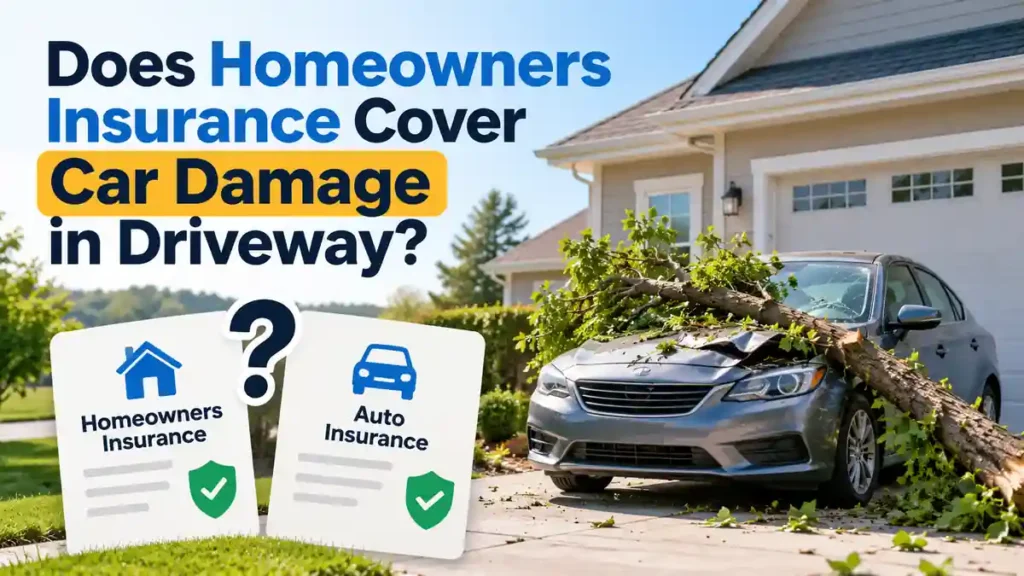
If your car gets damaged while parked at home, you may ask: does homeowners insurance cover car damage in driveway? Usually, homeowners insurance does not cover physical damage to a regular car, even when it sits on your property. Your auto insurance usually handles vehicle damage based on the cause and coverage you have. Comprehensive insurance may cover hail, theft, vandalism, or falling objects, while collision coverage may apply after an accident.
Does Homeowners Insurance Cover a Car in the Driveway?
Generally, homeowners insurance does not cover physical damage to a regular car just because it sits in your driveway.
Your homeowners policy mainly protects your home, certain structures, personal property, and liability. A regular road-going car typically needs its own auto insurance policy.
The cause of the damage matters. Comprehensive or collision coverage may help pay for your car, depending on your policy. Deductibles, exclusions, coverage limits, and state rules can also affect a claim.
Which Insurance Covers Car Damage in a Driveway?
The right coverage usually depends on what caused the damage.
Comprehensive Auto Insurance
Comprehensive coverage generally protects your car from covered non-collision losses.
It may cover damage from:
- Hail
- Falling trees or branches
- Fire
- Theft
- Vandalism
- Certain storms
- Flooding
- Falling objects
- Animal strikes
For example, if a tree falls on your parked car during a storm, comprehensive coverage may pay for covered repairs after your deductible.
Collision Auto Insurance
Collision coverage generally helps pay for covered damage when your car hits another vehicle or object.
Examples include:
- Hitting another car
- Hitting your garage
- Backing into a wall or post
- Hitting another object
- Your car overturning
If you back into your garage, collision coverage may help repair your car. Damage to the garage creates a separate insurance question.
Auto Liability Insurance
Liability coverage mainly protects you when you cause covered damage to someone else’s property.
For example, if another driver hits your parked car and has legal responsibility for the accident, their property-damage liability insurance may cover your vehicle.
Your own liability coverage would not normally pay to repair your car.
Common Driveway Car Damage Examples
Hail Damage
Homeowners insurance generally does not cover hail damage to your car. If you have comprehensive auto insurance, that coverage may pay for covered hail damage after your deductible.
If the same storm damages your roof, homeowners insurance may handle the covered roof damage separately.
A Tree Falls on Your Car
Comprehensive auto insurance may cover a car damaged by a falling tree or branch.
If the tree also damages your home, your homeowners policy may cover the eligible home damage. You could have separate claims and deductibles.
Your Car Gets Stolen
Homeowners insurance generally does not cover the stolen car itself. Comprehensive auto insurance may cover vehicle theft if your policy includes that coverage.
Personal items inside the car can work differently. Your homeowners or renters insurance may cover certain stolen belongings, subject to the policy terms.
Your Car Gets Vandalized
Comprehensive insurance may cover covered vandalism, such as:
- Broken windows
- Scratched paint
- Slashed tires
- Intentional dents
Your comprehensive deductible may apply.
Another Car Hits Your Parked Car
If another driver hits your car, their property-damage liability insurance may cover your repairs when they are legally responsible.
You may also use your own collision coverage, depending on your policy and circumstances. In that case, your collision deductible may apply.
What If Your Car and House Are Both Damaged?
One event can damage both your home and your vehicle.
For example, a storm could knock a tree onto your roof and the car in your driveway. Homeowners insurance may handle covered roof damage, while comprehensive auto insurance may handle covered damage to the car.
Each policy has its own coverage rules and deductible.
Are Personal Belongings Inside Your Car Covered?
There is an important difference between your car and the belongings inside it.
Homeowners insurance generally does not cover physical damage to your regular vehicle. However, homeowners or renters insurance may cover certain personal belongings stolen from the car.
These items could include:
- Laptop
- Phone
- Clothing
- Personal equipment
Coverage depends on your policy, limits, exclusions, and deductible.
What Should You Do After Driveway Car Damage?
Follow these steps after your car suffers damage:
- Take photos and videos of the car and surrounding area.
- Document what happened, including the date, time, and cause.
- Avoid unnecessary repairs until you document the damage.
- Review your auto policy for comprehensive or collision coverage.
- Check your deductible before filing a claim.
- Contact the appropriate insurer and explain what happened.
- Keep estimates, receipts, reports, and photos for your records.
- Ask questions if you are unsure which coverage applies.
Homeowners vs. Auto Insurance
| Situation | Homeowners Insurance | Auto Insurance |
|---|---|---|
| Hail damages your car | Generally no | Comprehensive may apply |
| Tree damages your car | Generally no | Comprehensive may apply |
| Car is stolen | Generally no | Comprehensive may apply |
| Car is vandalized | Generally no | Comprehensive may apply |
| Collision damages your car | Generally no | Collision may apply |
| Covered damage to your home | May apply | May apply in some situations |
| Belongings stolen from car | May potentially apply | Usually not under physical-damage coverage |
Frequently Asked Questions
Does homeowners insurance cover a car parked in a driveway?
Generally, no. A regular road-going car typically falls under an auto insurance policy, even when it sits in your driveway.
Does homeowners insurance cover hail damage to my car?
Generally, no. Comprehensive auto insurance may cover covered hail damage, subject to your deductible and policy terms.
What insurance covers a tree falling on my car?
Comprehensive auto insurance may cover covered damage from a falling tree or branch. Homeowners insurance may separately cover eligible damage to your home.
Does homeowners insurance cover a stolen car?
Generally, no. Comprehensive auto insurance may cover a stolen vehicle if you have that coverage.
Does comprehensive insurance cover a car damaged in a driveway?
It may. Comprehensive coverage generally applies to covered non-collision losses such as hail, theft, vandalism, fire, and falling objects.
What if someone hits my parked car?
The at-fault driver’s property-damage liability insurance may cover the damage. Your own collision coverage may also apply, depending on your policy.
Final Takeaway
Your driveway does not normally make your car part of your homeowners insurance coverage. For physical damage to a regular vehicle, auto insurance is generally the relevant coverage.
Comprehensive coverage may protect against covered events such as hail, theft, vandalism, and falling objects. Collision coverage may help with covered accident-related damage.
If one event damages both your home and car, different insurance policies may handle each loss. Your final coverage depends on your policy terms, deductibles, exclusions, coverage limits, cause of damage, and applicable state law.
When you are unsure, contact your insurer and explain exactly what happened. They can tell you which coverage may apply to your specific situation.
Read Also:-How to Get Car Insurance After Non-Renewal