
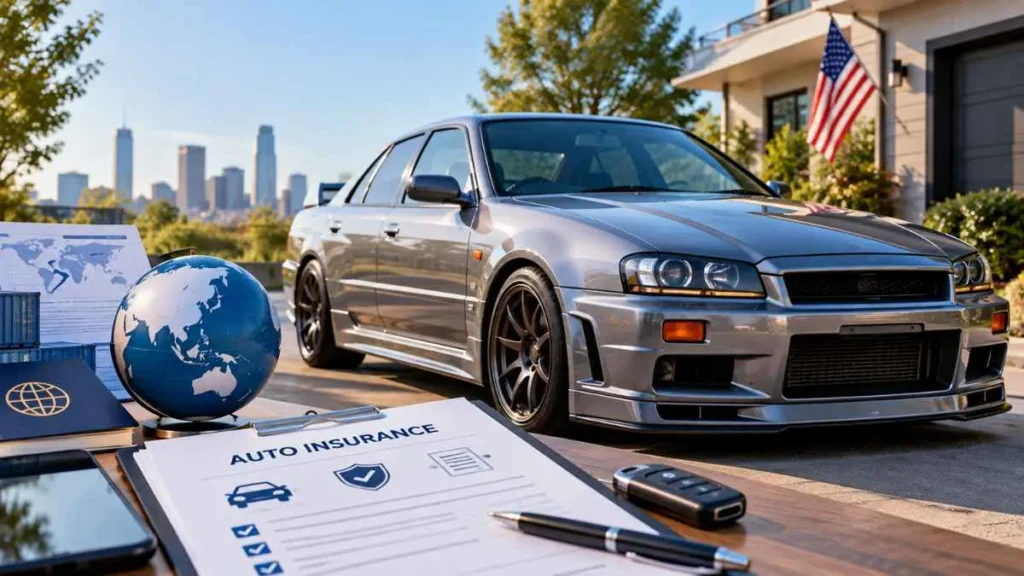
Does an imported car affect insurance? Yes, it can, but an imported vehicle does not automatically cost more to insure. Insurers may consider the car’s value, repair costs, parts availability, vehicle type, driving history, location, mileage, and selected coverage. Rare JDM, grey-market, classic, or exotic vehicles may also require additional underwriting or specialty insurance.
Does an Imported Car Cost More to Insure?
Not necessarily. There is no universal insurance surcharge simply because a vehicle was imported.
Instead, insurers evaluate the expected risk and potential cost of claims. The NAIC lists factors such as vehicle type, vehicle use, miles driven, location, driving record, claims history, coverage, and deductibles among common auto-insurance rating factors.
For imported vehicles, these factors can become especially important:
- Vehicle value: More expensive vehicles can cost more to repair or replace.
- Parts availability: Rare parts may be harder or more expensive to source.
- Repair costs: Specialized repairs can increase claim expenses.
- Vehicle performance: High-performance models may be rated differently.
- Theft risk: Theft patterns can affect insurance pricing.
- Driving history: Accidents and violations can affect your premium.
- Mileage and use: Daily commuting can differ from occasional use.
- Coverage and deductible: Your selected policy limits and deductible affect the price.
So, a common imported sedan may have very different insurance costs from a rare JDM sports car.
Why Can Imported Cars Be Harder to Insure?
The biggest issue is usually not the word “imported.” It is the fact that some imported vehicles are unusual compared with cars commonly sold in the U.S.
Parts and Repairs
A rare import may need parts from overseas or repairs from a specialist. That can make claims more complicated if replacement parts are difficult to obtain.
This does not mean every imported vehicle is expensive to repair. A widely supported model may have readily available parts, while a rare or modified vehicle can be much more difficult to service.
VIN and Vehicle Identification
Some foreign-market vehicles may have identification numbers that do not match the standard U.S. 17-character VIN format. NHTSA states that vehicles manufactured for sale in the U.S. are assigned a 17-digit VIN, while certain imported vehicles can retain non-U.S.-conforming identification numbers.
As a result, an online insurance system may fail to recognize the vehicle.
That does not necessarily mean the car is uninsurable. An agent may be able to review the vehicle manually.
Vehicle Valuation
Rare imports can also be harder to value because there may be fewer comparable vehicles in the U.S. market.
This matters if the vehicle is totaled. Owners of rare or collector vehicles should understand whether their policy uses actual cash value, agreed value, or another valuation method.
Can You Get Insurance for an Imported Car in the U.S.?
Yes, many imported cars can be insured in the U.S.
Your options may include:
Standard Auto Insurance
A standard personal auto policy may work if the insurer can identify the vehicle and accepts its risk.
Coverage can include liability, collision, comprehensive, uninsured/underinsured motorist coverage, and other protections depending on the state and policy.
Specialty or Collector Insurance
Rare, classic, exotic, or collector imports may qualify for specialty coverage.
Some specialty policies offer agreed-value coverage, which can be useful when a vehicle has an unusual or difficult-to-establish market value. However, collector policies can have restrictions involving mileage, storage, or daily use.
Never assume a collector policy allows everyday commuting. Check the policy terms.
What Is a Grey-Market Imported Car?
A grey-market vehicle is generally a vehicle originally manufactured for a foreign market rather than specifically built and certified for normal U.S. sales.
That is different from a foreign-brand vehicle officially sold in the United States. For example, a Toyota manufactured overseas and officially sold through the U.S. market is not automatically a grey-market car.
Grey-market vehicles may have different specifications, equipment, identification, or documentation, which can create additional insurance questions.
Can You Insure a JDM Car in the U.S.?
Yes, a JDM car can potentially be insured in the United States.
JDM means Japanese Domestic Market and generally refers to vehicles or specifications intended for Japan.
An insurer may consider:
- VIN or chassis identification
- Parts availability
- Vehicle value
- Performance
- Modifications
- Right-hand-drive configuration
- Intended use
A JDM car does not automatically require specialty insurance or automatically cost more. The specific vehicle and insurer matter.
Does the 25-Year Import Rule Affect Insurance?
The federal 25-year rule primarily concerns vehicle importation and federal safety requirements, not insurance coverage.
NHTSA states that a vehicle at least 25 years old can generally be imported without regard to compliance with applicable Federal Motor Vehicle Safety Standards, with the 25-year period measured from the vehicle’s date of manufacture.
However, reaching 25 years old does not guarantee insurance.
Import eligibility and insurance eligibility are separate issues. EPA requirements are also separate from NHTSA safety requirements, and state requirements for title, registration, inspections, emissions, and insurance can vary.
How to Find Insurance for an Imported Car
Before buying or importing the vehicle:
- Confirm the vehicle’s legal import status.
- Collect the VIN or chassis number and import documents.
- Contact multiple insurers.
- Ask whether the exact vehicle can be covered.
- Ask about daily use and mileage restrictions.
- Confirm how the vehicle will be valued after a total loss.
- Ask about imported parts and modifications.
- Contact an agent if an online quote cannot identify the vehicle.
An online quote failure does not necessarily mean coverage is unavailable.
Questions to Ask Your Insurer
Before purchasing a policy, ask:
- Can you insure this exact make, model, and year?
- Can your system recognize the VIN or chassis number?
- Is daily driving allowed?
- How will the vehicle be valued?
- Are imported OEM parts covered?
- Are modifications covered?
- Are there mileage or storage restrictions?
- What happens if the vehicle is totaled?
Getting these answers before a claim can prevent unpleasant surprises later.
Bottom Line: Does an Imported Car Affect Insurance?
Yes, an imported car can affect insurance, but it does not automatically mean higher premiums.
The biggest considerations are usually the vehicle’s value, repair costs, parts availability, identification, performance, intended use, and the insurer’s underwriting rules.
Some imports fit standard auto insurance, while rare JDM, grey-market, classic, exotic, or collector vehicles may need additional review or specialty coverage.
If you are planning to buy an imported car, check insurance before purchasing it. Confirm coverage for the exact vehicle, VIN or chassis number, intended use, valuation method, and any modifications. That simple step can help you avoid coverage problems later.
Read Also:-Can I Have Two Insurance Policies on One Car