
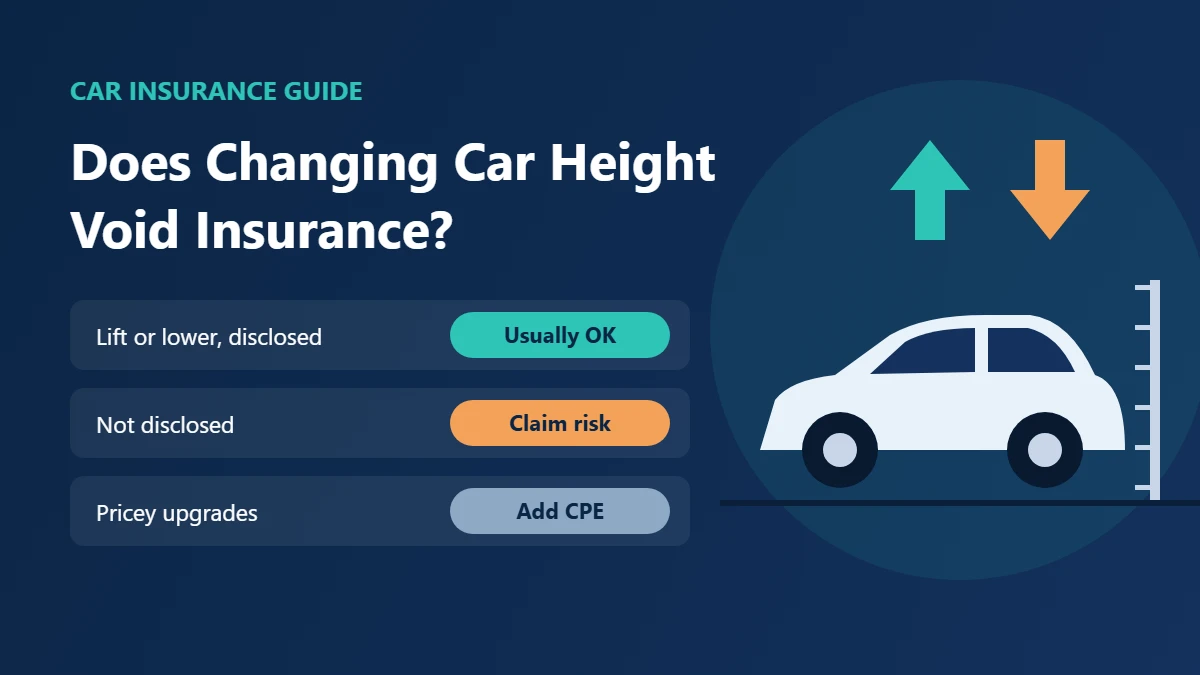
No, lifting or lowering your car doesn’t automatically void your insurance. But it is a modification, and that matters. If you don’t tell your insurer, the custom parts may not be covered, and in some cases a claim could be challenged. Some insurers also decline heavily modified vehicles. The safe approach is simple: disclose the change, ask about custom parts coverage, and make sure the modification is legal in your state.
Here’s how height changes affect your coverage, what “void” really means, and what to do before and after you modify your car.
Lifting or Lowering Your Car: What Changes for Insurance
| Situation | What usually happens |
|---|---|
| You lift or lower your car and tell your insurer | Coverage continues; your rate may change |
| You modify it and don’t tell your insurer | Custom parts may not be covered; claims may face extra scrutiny |
| Your upgrades are worth more than the standard limit | Add custom parts and equipment (CPE) coverage |
| The car is heavily modified | Some insurers may decline; a specialty insurer may be needed |
| The modification breaks state equipment rules | Possible tickets, failed inspection, and claim complications |
Why Height Changes Matter to Insurers
Insurers price policies based on risk and repair costs. According to the Insurance Information Institute, premiums are based in part on a car’s price, the cost to repair it, its safety record, and the likelihood of theft.
Changing a car’s height can affect several of those factors:
- Handling and stability. A lifted truck sits higher, which can change how it handles. A lowered car may scrape curbs and road debris more often.
- Repair costs. Aftermarket suspension parts, larger wheels, and tires can cost more to replace after a claim.
- Theft and vandalism. Expensive wheels and visible upgrades can attract thieves.
- Driver-assistance systems. On newer cars, changing ride height may affect cameras and sensors, which may need recalibration after a suspension change or repair.
Does It Void Your Policy? What “Void” Really Means
A policy isn’t usually canceled just because you change your car’s height. The bigger risk is not telling your insurer. As Progressive explains, if you fail to notify the company, the custom elements may not be covered, and any repairs or part replacements will be your financial responsibility.
In more serious cases, hiding a significant change can be treated as misrepresentation, which could lead an insurer to dispute a claim, cancel or decline to renew a policy, depending on your state’s rules and your policy terms. Telling your insurer up front avoids all of this.
Progressive also notes that some insurance companies won’t provide insurance for modified cars if they exceed certain criteria. If your current insurer won’t cover your setup, a specialty or modified-car insurer may.
Is Your Lift Kit or Lowering Kit Covered?
Your standard policy typically covers your car as it came from the factory, with limited coverage for aftermarket parts. For more expensive upgrades, you’ll usually need custom parts and equipment coverage, sometimes called CPE. According to Progressive’s coverage guide, CPE can help pay to repair or replace items you add to modify your car, and it typically has a $5,000 limit.
A few things to know:
- You generally need comprehensive and collision to add CPE coverage.
- Your deductible still applies to custom parts claims.
- For high-value builds, ask about stated or agreed value coverage, which sets the car’s value up front.
Keep receipts, invoices, and before-and-after photos of every upgrade. If you ever file a claim, that paperwork shows what the parts were worth.
Will a Lift or Lowering Kit Raise Your Premium?
There’s no universal surcharge for changing a car’s height. The effect depends on your insurer, how extensive the change is, and how much value the parts add. A modest leveling kit may barely move your rate, while a large lift with oversized wheels and tires adds more replacement cost to cover. Adding CPE coverage also costs a little extra.
Not every modification raises rates. Progressive notes that some safety and security add-ons, such as alarms or cameras, may even qualify for discounts. Ask your insurer for a quote on the finished setup before you buy parts.
Is Your Height Change Legal?
Insurance is only part of the picture. Some states set limits on how much a vehicle can be raised or lowered, or on bumper, frame, or headlight height. Even where there are no specific height limits, your car still has to pass any required safety inspection. The Virginia State Police inspection program, for example, checks steering and suspension for items like lift blocks, and checks headlights for proper aim.
Before modifying your car, check your state’s vehicle code or DMV rules. An illegal modification can lead to tickets or a failed inspection, and it can complicate a claim after an accident.
What to Do Before and After You Modify Your Car
- Check your state’s height and equipment rules before you buy parts.
- Call your insurer and describe exactly what you plan to change.
- Ask how it affects your premium and whether your insurer accepts the modification.
- Add CPE coverage if your upgrades exceed standard limits.
- Use a reputable shop and keep all receipts and work orders.
- Re-aim your headlights and recalibrate driver-assistance sensors if needed.
- Update your insurer after the work is done, and get the change in writing.
If you already modified your car without telling your insurer, contact them now. It’s far better to update your policy before a claim than after.
Planning to take a lifted truck off-road? See whether car insurance covers off-road driving. Importing a modified car? Read how an imported car affects insurance.
The Bottom Line
Adjusting your car’s height doesn’t automatically void your insurance, but it’s a modification your insurer needs to know about. Disclose lift kits and lowering kits, add custom parts and equipment coverage for valuable upgrades, and keep records of everything. Make sure the change is legal in your state and passes inspection. Handled that way, a height modification is unlikely to cause trouble with your coverage.