
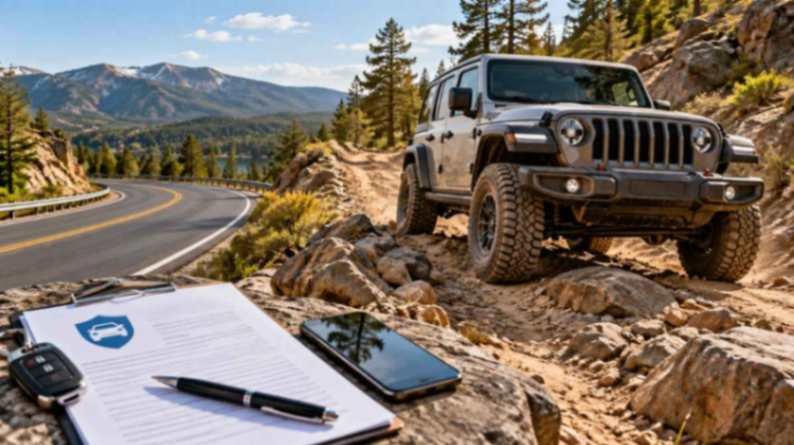
If you’re wondering, does car insurance cover off road driving, the answer is: sometimes, but not always. Coverage depends on your policy, vehicle, location, type of driving, and exclusions.
For example, a street-legal Jeep may have different coverage than an ATV or UTV. Also, having “full coverage” does not guarantee protection on every trail or off-road area.
Does Car Insurance Cover Off-Road Driving?
Your policy decides whether your insurance covers off-road driving. A standard auto policy may cover some damage to a street-legal car, truck, or SUV. However, an exclusion can limit or prevent coverage.
For example, collision coverage may help pay for damage after you hit a rock, tree, or another vehicle. Comprehensive coverage may help with covered losses such as theft, fire, hail, or vandalism.
However, your insurer may exclude certain types of off-road use. Therefore, always check your policy before driving on a trail.
When Can Off-Road Coverage Apply?
Depending on your policy, these coverages may matter:
- Collision: May cover damage from a covered accident.
- Comprehensive: May cover certain non-collision losses.
- Liability: May cover injuries or property damage you cause to others.
- Uninsured motorist: May help after an accident with an uninsured driver, where your policy and state rules allow it.
Still, having these coverages does not mean every off-road accident qualifies.
Does Full Coverage Cover Off-Roading?
“Full coverage” is not a specific insurance policy. People usually use the term to describe liability, collision, and comprehensive coverage.
Even with all three, your policy can include exclusions. For instance, your collision coverage may not apply if your policy excludes the type of off-road driving involved.
Also, your deductible still applies to a covered claim.
So, remember: full coverage does not mean unlimited coverage everywhere you drive.
Does Collision Insurance Cover Off-Road Accidents?
Collision insurance may cover damage to your vehicle after a covered off-road accident.
For example, you may:
- Hit a large rock
- Strike a tree
- Roll over on uneven ground
- Hit another vehicle
- Lose control and hit an object
In these situations, collision coverage may help pay for repairs after your deductible.
However, the insurer will also check the policy terms. If your policy excludes the type of off-road use involved, the claim may have limited or no coverage.
Does Comprehensive Insurance Cover Off-Road Damage?
Comprehensive insurance generally covers certain losses that do not result from a collision.
For example, it may cover:
- Theft from an off-road campsite
- Fire damage
- Hail damage
- Vandalism
- Certain weather-related losses
- Covered animal-related damage
The cause of the loss matters. If you hit a rock while driving, collision coverage may apply. If someone steals your parked vehicle, comprehensive coverage may apply.
Of course, your deductible, limits, and exclusions still matter.
Does the Road or Trail Matter?
Yes. The type of road can affect how an insurer evaluates a claim.
A public dirt road may receive different treatment from a designated recreational trail.
Likewise, a Forest Service road may differ from an OHV trail or undeveloped terrain.
Driving outside an authorized trail can create additional coverage questions. Therefore, tell your insurer exactly where you plan to drive.
Does Insurance Cover Off-Roading in a Jeep, SUV, or Truck?
A Jeep, SUV, or truck may have insurance under a standard auto policy. However, the vehicle’s off-road capability does not automatically create off-road coverage.
For example, a Jeep Wrangler, Ford Bronco, Toyota 4Runner, or Toyota Tacoma may be designed for off-road use. Still, your insurance contract controls coverage.
If you regularly go off-roading, ask your insurer whether your policy covers recreational trail driving.
Do ATVs and UTVs Need Separate Insurance?
ATVs, UTVs, side-by-sides, dirt bikes, snowmobiles, and dune buggies are different from normal street-legal vehicles.
Because of that, owners often need or choose specialty off-road insurance. Depending on the policy, this coverage may include liability, collision, comprehensive, medical payments, and protection for custom equipment.
Requirements vary by state and insurer.
Does Insurance Cover Off-Road Racing?
Do not assume recreational off-road coverage includes racing.
Policies may exclude:
- Racing
- Speed contests
- Timed events
- Organized competitions
- Certain high-risk activities
Therefore, ask your insurer before entering an off-road race or competition.
Are Off-Road Modifications Covered?
Off-road vehicles often have expensive upgrades, such as lift kits, larger tires, custom wheels, winches, bumpers, and suspension parts.
However, your standard policy may not fully cover these modifications.
Tell your insurer about major upgrades. Also, keep receipts, photos, and installation records. Ask whether custom equipment coverage can protect those items.
Does Roadside Assistance Cover Off-Road Recovery?
Not necessarily.
Roadside assistance and auto insurance provide different types of protection. For example, getting stuck in deep mud may require winching or specialized recovery equipment.
Therefore, check whether your roadside plan includes off-road recovery or winching before heading onto a trail.
What Should You Ask Your Insurer?
Before going off-road, ask these questions:
- Does my policy cover recreational off-road driving?
- Is off-road use excluded?
- Does coverage apply on dirt or Forest Service roads?
- Does it apply on designated trails?
- Are racing and competitions excluded?
- Are my modifications covered?
- Does roadside assistance include off-road recovery?
- Can you confirm my coverage in writing?
Bottom Line
So, does car insurance cover off road driving? It may, but coverage is not automatic.
Your vehicle, location, activity, cause of damage, policy exclusions, and state rules can all affect coverage. A street-legal Jeep may have different coverage from an ATV or UTV.
Before you hit the trail, check your policy and ask your insurer about your exact plans. Getting clear answers beforehand can help you avoid an unexpected claim problem later.
Read Also:-Does Car Insurance Count as a Utility Bill