
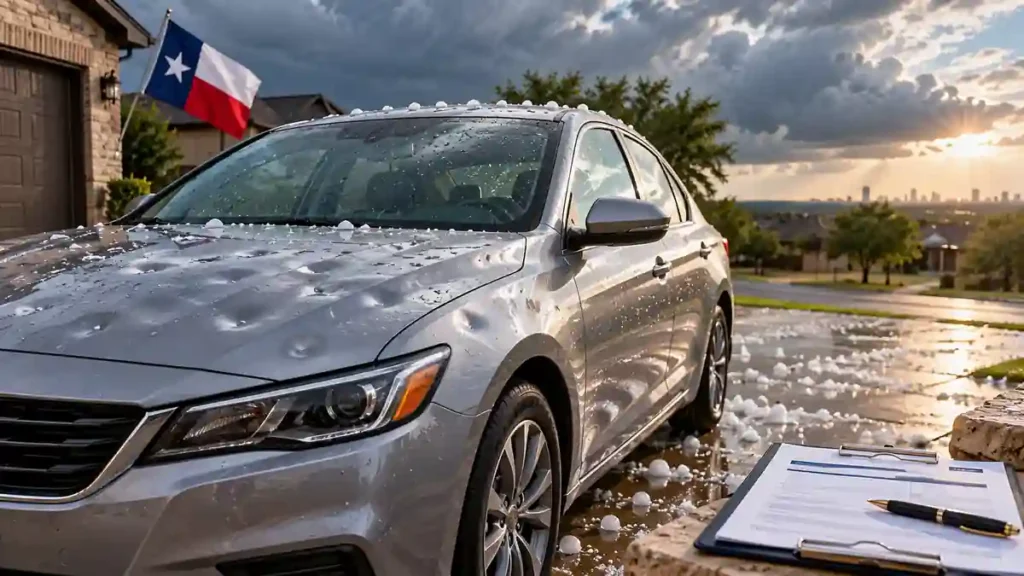
Wondering, does hail damage claim raise car insurance rates in Texas? A hailstorm can cause expensive dents, broken glass, and other vehicle damage. The good news is that hail damage is generally covered by comprehensive insurance and is not considered an at-fault accident. However, filing a claim can still affect your insurance costs in some situations.
Does a Hail Damage Claim Raise Car Insurance Rates in Texas?
A hail damage claim can affect your insurance costs, but a rate increase is not automatic. Hail is generally covered under comprehensive coverage because it is a weather-related event rather than a collision caused by the driver.
Texas Department of Insurance (TDI) says auto premiums can increase after claims, depending on the type and number of claims. Policyholders may also lose discounts they received for being claim-free.
However, a hail claim should not automatically be treated like an at-fault accident. Your insurer’s rating rules, claims history, discounts, and broader insurance costs can all influence your renewal price.
Why Hail Claims Are Different From At-Fault Accidents
Hail is a weather event outside your control. Comprehensive insurance, also called physical damage coverage other than collision, generally covers hail, along with certain losses from events such as theft, fire, vandalism, and flooding.
Because you did not cause the hailstorm, a hail claim is generally not an at-fault collision. That does not guarantee that the claim will have no effect on your insurance costs, but it is different from causing an accident.
Does Comprehensive Insurance Cover Hail Damage?
Yes. If you have comprehensive coverage when the hailstorm occurs, your policy will generally cover covered hail damage, subject to your policy terms and deductible. TDI specifically advises Texas drivers that comprehensive auto coverage can pay for hail damage.
Hail can damage:
- Hood and roof
- Doors and trunk
- Body panels
- Paint
- Windows and other glass
Your comprehensive deductible normally applies to a covered claim.
For example, if repairs cost $5,000 and your deductible is $1,000, you would generally be responsible for the $1,000 deductible, with the insurer potentially paying the remaining covered amount.
If you only carry liability insurance, it generally will not pay to repair hail damage to your own vehicle.
Can You Lose a Claim-Free Discount After a Hail Claim?
Possibly. A claim-free discount is a reduction in your premium for maintaining a qualifying claim-free history. Depending on your insurer’s rules, filing a claim could affect your eligibility for that discount.
This is different from a rate surcharge.
A surcharge is an additional charge associated with a rating factor. Losing a discount means you no longer receive a previous reduction in your premium.
For example, if your annual premium is $1,500 and you receive a $150 claim-free discount, losing that discount could increase your renewal cost to $1,650. That does not necessarily mean your insurer added a $150 hail-claim surcharge.
The treatment of comprehensive claims varies by insurer and policy.
Can Your Insurance Increase Even If You Don’t File a Hail Claim?
Yes. Your insurance premium can increase even if you never file a hail claim.
Insurance companies consider both individual risk factors and their overall claim costs when setting prices. Texas weather events, including hailstorms, can create large numbers of expensive vehicle claims. Higher repair and replacement costs can also contribute to broader rate changes.
As a result, a driver who never filed a hail claim could still see a higher premium after a period of significant weather-related losses.
Can One Hail Claim Get Your Insurance Canceled in Texas?
Cancellation and nonrenewal are different. Cancellation ends a policy before its expiration date, while nonrenewal means the insurer does not continue the policy after it expires.
Texas provides protections for weather-related claims. TDI’s auto insurance guide says an insurer cannot refuse to renew a policy because of claims for weather damage.
This does not mean an insurer can never cancel or nonrenew a policy for other legitimate reasons. For example, Texas rules allow cancellation in certain circumstances, including nonpayment or fraudulent claims.
Does a Hail Claim Go on Your Insurance Record?
A hail claim can become part of your insurance claims history. Insurers may review claims history when evaluating coverage and pricing.
This is different from your driving record. A driving record generally relates to driving activity, such as traffic violations and accidents. A hail claim is normally a comprehensive insurance claim rather than an at-fault driving accident.
Should You File a Hail Damage Claim?
Before filing, compare the repair estimate with your comprehensive deductible.
For example:
Repair cost: $800
Deductible: $1,000
Filing may not make financial sense because the estimated repair cost is below your deductible.
But consider:
Repair cost: $6,000
Deductible: $1,000
A claim could potentially cover a much larger portion of the repair cost after the deductible.
Also consider:
- Severity of the damage
- Previous claims
- Potential loss of a discount
- Vehicle value
- Possible hidden damage
- Whether the damage affects safety
If you are unsure, get a repair estimate and ask your insurer how a comprehensive hail claim could affect your policy.
What Should You Do After a Hailstorm?
- Photograph the damage. Take clear photos and videos from multiple angles.
- Check your policy. Confirm comprehensive coverage and your deductible.
- Get a repair estimate. Find out how much the damage may cost to repair.
- Contact your insurer. Ask about coverage and the claims process.
- Watch for repair scams. Be cautious of anyone pressuring you to sign quickly or promising to waive your deductible.
TDI also recommends documenting hail damage and being available when the insurance adjuster inspects the vehicle.
Hail Damage Claim vs. At-Fault Accident
| Factor | Hail Claim | At-Fault Accident |
|---|---|---|
| Typical coverage | Comprehensive | Collision/liability, depending on circumstances |
| Driver caused the loss? | No | Yes |
| At-fault accident? | Generally no | Yes |
| Weather-related? | Yes | Usually no |
| Can costs be affected? | Potentially | Often more directly |
Frequently Asked Questions
Does one hail claim raise insurance rates in Texas?
Not automatically. A hail claim can affect insurance costs, but the outcome depends on your insurer, policy, claims history, discounts, and other rating factors.
Is hail damage covered by comprehensive insurance?
Generally yes, subject to your policy terms and comprehensive deductible.
Is a hail claim an at-fault accident?
Generally no. Hail is a weather event outside the driver’s control.
Can I lose my claim-free discount?
Possibly. The effect depends on your insurer and policy.
Can my insurance increase without a hail claim?
Yes. Broader rate changes can result from insurers’ overall losses and rising repair costs.
Should I file a claim for minor hail damage?
Compare the repair cost with your deductible and consider your claims history before filing.
Bottom Line
A hail damage claim in Texas does not automatically raise your car insurance rate, but it can affect your insurance costs. Your insurer may consider claims history and discounts, while broader rate changes can result from severe weather losses and higher repair costs.
If your car has hail damage, compare the repair estimate with your comprehensive deductible before deciding whether to file. Most importantly, ask your insurer how the claim could affect your coverage, discounts, and renewal premium.
Read Also:-Can You Backdate Car Insurance