
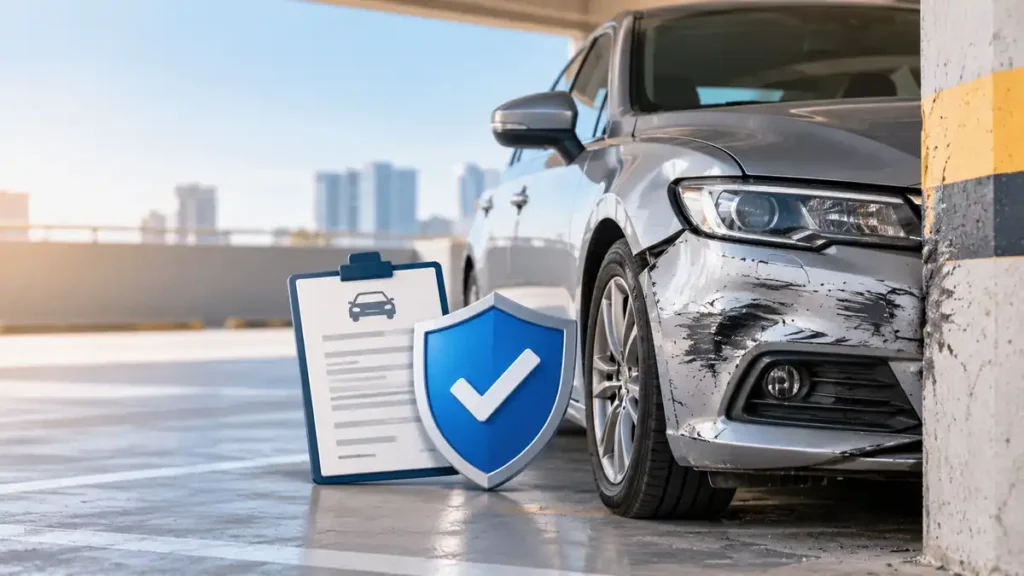
Wondering, does car insurance cover self-inflicted damage? The answer is yes, if the damage happened accidentally and you have the right coverage. For example, collision insurance may cover damage from hitting a pole, wall, fence, tree, or another vehicle, subject to your deductible. Comprehensive insurance covers different non-collision losses, while liability insurance generally does not repair your own car. Understanding which coverage applies can help you decide whether to file a claim, pay out of pocket, or contact your insurer.
What Does “Self-Inflicted Damage” Mean on a Car?
Self-inflicted car damage generally means damage to your own vehicle caused by your actions. The damage can be accidental or intentional, and the distinction is important when determining whether insurance may cover the loss.
Common examples include:
- Hitting a pole while parking
- Backing into a wall
- Hitting a fence
- Scraping a garage
- Hitting a tree
- Getting into a single-car accident
- Damaging your car while parking
Accidental damage may be covered when you have the appropriate insurance. Intentional damage is generally excluded.
Does Car Insurance Cover Accidental Self-Inflicted Damage?
Yes, car insurance can potentially cover accidental self-inflicted damage if you have the right coverage. In most situations, collision coverage is the key coverage for damage to your own vehicle caused by an accidental collision.
For example, if you accidentally hit a pole, wall, fence, tree, or another vehicle, collision insurance may help pay for repairs even if you caused the accident. Your deductible generally applies.
Coverage is not automatic, however. Your policy terms, exclusions, coverage limits, and the circumstances of the accident can affect whether a claim is covered.
Also, “full coverage” is not a standardized insurance policy. It commonly refers to liability, collision, and comprehensive coverage, but it does not mean every possible loss is covered.
What If You Damage Your Car While Parking?
Parking accidents are a common way drivers accidentally damage their own vehicles. If you hit a concrete pillar, scrape another object, back into a wall, hit a shopping-cart area, or strike a mailbox, collision coverage may help pay for the damage.
For example, if repairs cost $2,000 and your collision deductible is $500, your insurer may pay $1,500 of the covered repair cost after the deductible.
If you only have liability insurance, it generally will not pay to repair your own vehicle.
What If You Hit Your Own Car or Another Car You Own?
Insurance can become more complicated when two vehicles involved in an accident are owned by the same person or household.
Coverage may depend on who owns each vehicle, how they are insured, the policy wording, and the circumstances of the accident. Collision coverage on the damaged vehicle may potentially apply, but you should not assume that both vehicles will automatically be covered.
Check your policy or contact your insurer before assuming a claim will be paid.
What If You Hit an Animal?
The type of coverage can depend on what happened.
If you directly hit an animal, such as a deer, comprehensive coverage may generally apply.
If you swerve to avoid an animal and hit a tree, fence, pole, or another object, collision coverage may generally apply.
In simple terms:
- Hit the animal directly → Comprehensive may apply
- Avoid the animal and hit an object → Collision may apply
Your deductible and policy terms still apply.
How Does the Deductible Affect a Claim?
A deductible is the amount you generally pay toward a covered claim before your insurer pays the remaining eligible amount.
For example:
Repair cost: $2,500
Collision deductible: $500
Potential insurance payment: $2,000
If the repair costs less than your deductible, your insurance generally will not pay toward the repair. If the repair cost is only slightly higher than your deductible, consider whether filing a claim makes financial sense.
Should You File a Claim for Self-Inflicted Damage?
Not every accident needs to result in an insurance claim.
Consider filing when:
- The damage is substantial.
- Repairs cost significantly more than your deductible.
- You cannot reasonably afford the repair.
- Your policy clearly provides coverage.
Consider paying out of pocket when:
- The damage is minor.
- Repair costs are close to your deductible.
- You can comfortably afford the repairs.
- You want to avoid a potential claim-related premium impact.
An at-fault claim does not automatically mean your premium will increase. The impact can depend on your insurer, state, driving history, claims history, and policy. Some policies may also offer accident forgiveness.
Can a Self-Inflicted Accident Increase Your Insurance Rate?
Yes, an at-fault accident can potentially affect your future insurance premiums, but an increase is not guaranteed.
Insurers may consider:
- Your driving history
- Previous claims
- The severity of the accident
- The cost of the claim
- Your state
- The insurer’s rating rules
- Accident forgiveness, if available
Because insurance rules vary, ask your insurer how a claim could affect your policy when appropriate.
What Damage Is Usually Not Covered?
Even with collision and comprehensive coverage, some losses are generally excluded.
These may include:
- Intentional damage
- Pre-existing damage
- Normal wear and tear
- Mechanical breakdown
- Losses specifically excluded by the policy
Exact exclusions depend on your policy, so review your coverage before assuming a claim will be paid.
What Should You Do After Accidentally Damaging Your Car?
Follow these steps after an accident:
- Make sure everyone is safe.
- Move the vehicle if it is safe to do so.
- Take photos and videos of the damage and accident scene.
- Document when, where, and how the accident happened.
- Get a repair estimate.
- Check your deductible and coverage.
- Review relevant policy exclusions.
- Contact your insurer if you decide to file a claim.
- Provide accurate information about the accident.
Never change the facts or accident date to make a claim appear covered. Providing false information can lead to a denied claim and potentially more serious consequences.
Frequently Asked Questions
Does car insurance cover self-inflicted damage?
Yes, accidental damage may be covered if you have the appropriate coverage, such as collision insurance.
Does collision insurance cover hitting a pole?
Yes. Collision coverage may cover accidental damage from hitting a pole, subject to your deductible and policy terms.
Does liability insurance cover damage to my own car?
Generally, no. Liability coverage primarily pays for injuries or property damage you cause to others.
Does comprehensive insurance cover self-inflicted damage?
Comprehensive generally covers non-collision losses such as theft, vandalism, fire, weather damage, and falling objects.
Does insurance cover intentionally damaging your own car?
Generally, no. Intentional damage is typically excluded from standard auto insurance coverage.
Will a self-inflicted accident increase my insurance rate?
It can, particularly when the accident is considered at fault, but a premium increase is not guaranteed.
Bottom Line
Accidental self-inflicted damage can be covered by car insurance, but the answer depends on how the damage happened and what coverage you have. Collision coverage generally applies when you accidentally damage your own vehicle in a crash, while comprehensive covers certain non-collision losses. Liability-only coverage generally does not repair your own car, and intentional damage is generally excluded.
Before filing a claim, compare your repair cost with your deductible and consider the potential effect on your insurance premiums. Always check your specific policy because coverage can vary by insurer and state.
Read Also:-Can You Backdate Car Insurance