
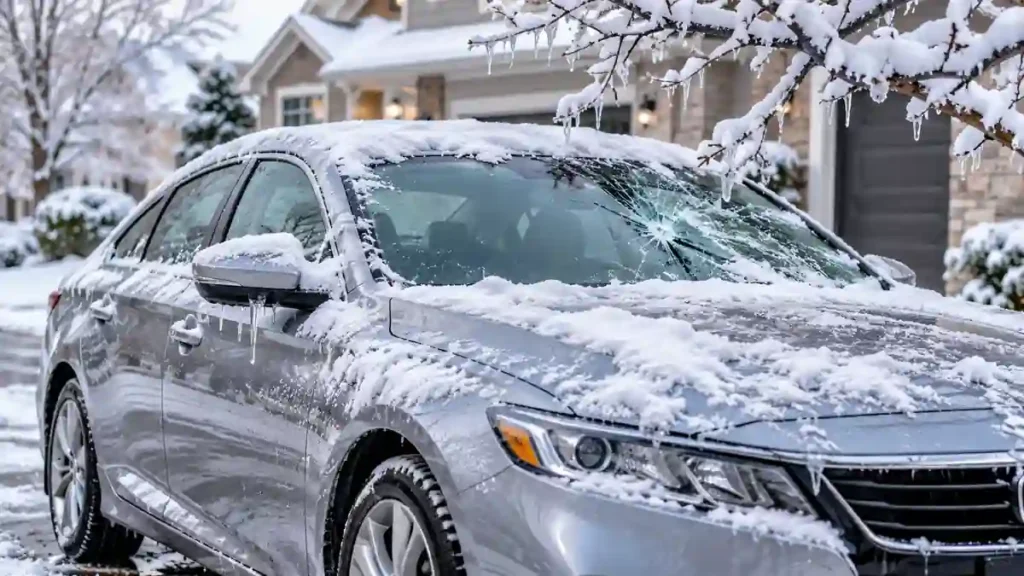
If you’re wondering is snow damage covered by car insurance, the answer depends on how the damage happened and what coverage your policy includes. Comprehensive coverage may pay for certain non-collision damage caused by snow, ice, or falling objects, while collision coverage may apply if you slide on snow or ice and crash. Your deductible, policy terms, exclusions, and state rules can also affect coverage.
Does Car Insurance Cover Snow Damage?
Car insurance may cover snow and ice damage, but not every winter-related problem is automatically covered.
The type of incident usually determines which coverage applies. Comprehensive insurance generally covers eligible non-collision damage, while collision insurance generally covers damage caused by hitting another vehicle or object.
For example, an icicle falling on your parked car may fall under comprehensive coverage. If your vehicle slides on an icy road and hits a tree, collision coverage may apply instead.
If you only have liability insurance, damage to your own vehicle is generally not covered.
When Does Comprehensive Insurance Cover Snow Damage?
Comprehensive coverage generally applies to eligible damage caused by something other than a collision. Several winter situations may qualify.
Snow or Ice Damages a Parked Car
Heavy snow or ice can damage a parked vehicle. Falling icicles can crack a windshield, dent the hood, or damage the roof.
If the damage is caused by a covered weather event, comprehensive insurance may help pay for repairs, subject to your deductible and policy terms.
A Snow-Covered Branch Falls on Your Car
Snow and ice can add substantial weight to tree branches. If a branch breaks and falls onto your vehicle, comprehensive coverage may cover the resulting damage.
For example, if a snow-covered branch damages your roof while your car is parked, you may be able to file a comprehensive claim.
Ice Damages Your Windshield
Falling ice or icicles can damage windshields, windows, mirrors, and other vehicle components. When the damage is caused by a covered weather event rather than a collision, comprehensive coverage may apply.
However, if the windshield breaks because you crash into another vehicle or object, collision coverage may be the applicable coverage.
Snowmelt Floods Your Vehicle
Heavy snow can sometimes melt rapidly and contribute to flooding or standing water. Comprehensive coverage may cover qualifying flood damage, depending on your policy and the circumstances.
Does Collision Insurance Cover Snow and Ice Accidents?
Yes, collision coverage may apply when snow or ice causes you to lose control and crash.
For example, if you slide on an icy road and hit:
- Another vehicle
- A tree
- A fence
- A guardrail
- A pole
- A ditch
your collision coverage may help pay for covered damage to your vehicle, minus your deductible.
If you damage another person’s vehicle, your liability coverage may also apply to eligible losses you caused, subject to your policy limits and state law.
What Snow Damage Is Usually Not Covered?
Car insurance does not automatically cover every problem caused by winter weather. Common examples that may not be covered include:
- Normal wear and tear
- General mechanical failure
- Certain engine problems caused by freezing temperatures
- Battery failure
- Damage caused by improper maintenance
For example, if your battery dies because of extremely cold weather, comprehensive coverage generally does not pay simply because the temperature was low. Roadside assistance may provide a jump-start or towing service if your policy includes it.
Damage you accidentally cause while scraping or shoveling snow is also not automatically considered covered weather damage.
Does “Full Coverage” Include Snow Damage?
“Full coverage” is a common insurance term, but it does not guarantee that every type of winter damage is covered.
If you want protection for snow and ice damage, check whether your policy includes:
- Comprehensive coverage for eligible non-collision weather damage
- Collision coverage for eligible crashes involving your vehicle
- Liability coverage for eligible damage or injuries you cause to others
Your deductible is also important. If you have a $500 comprehensive deductible and your covered snow damage costs $2,000 to repair, you may pay the first $500 and the insurer may pay approximately $1,500.
Will a Snow Damage Claim Increase Your Insurance Rates?
A snow-related claim can potentially affect your future insurance premiums, but there is no universal rule.
The impact can depend on your state, insurer, claim type, claims history, and whether you were considered at fault.
A comprehensive claim for a falling tree branch is different from a collision claim after losing control on an icy road. Your insurer determines how the claim is handled under its policies and applicable state rules.
Does Snow Automatically Make an Accident Not at Fault?
No. Snow and ice do not automatically make a car accident “not at fault.”
Drivers are generally expected to adjust their speed and driving to road conditions. If a driver loses control on an icy road, the insurer may still determine that the driver was responsible for the crash.
However, a collision can still be covered by collision insurance even if the driver is considered at fault.
What Should You Do After Snow Damages Your Car?
If snow or ice damages your vehicle:
- Stay safe and avoid dangerous areas.
- Take photos and videos of the damage.
- Photograph snow, ice, fallen branches, or road conditions when safe.
- Contact your insurance company.
- Ask whether comprehensive or collision coverage applies.
- Confirm your deductible.
- Ask about rental reimbursement if your car needs repairs.
- Keep estimates, receipts, photos, and claim documents.
Snow Damage Insurance Examples
| Situation | Likely Coverage |
|---|---|
| Icicle damages parked car | Comprehensive |
| Snow-covered branch falls on car | Comprehensive |
| Ice damages windshield | Comprehensive |
| Snowmelt floods vehicle | Comprehensive may apply |
| Car slides into a tree | Collision |
| Car slides into another vehicle | Collision + liability |
| Liability-only policy | Own vehicle generally not covered |
| Cold-weather mechanical failure | Generally not covered |
Frequently Asked Questions
Does comprehensive insurance cover snow damage?
It may cover eligible non-collision damage caused by snow, ice, falling branches, or other covered weather events.
Does collision insurance cover accidents caused by snow?
Yes, collision coverage may cover eligible damage when your vehicle slides on snow or ice and crashes.
Does liability insurance cover snow damage to my car?
Generally, no. Liability coverage normally pays for eligible damage or injuries you cause to others, not your own vehicle.
Is falling ice damage covered by car insurance?
Falling ice or icicles may be covered under comprehensive insurance when the damage qualifies as a covered loss.
Do I need special snow insurance?
No. Standard auto insurance can provide applicable protection through comprehensive and collision coverage, depending on your policy.
Final Answer
Snow damage may be covered by car insurance, but coverage depends on how the damage occurred and what insurance you have. Comprehensive generally applies to covered non-collision snow and ice damage, while collision may cover crashes caused by sliding on snowy or icy roads. Liability generally covers damage you cause to others, not your own vehicle.
Always check your policy, deductible, and applicable state rules before assuming a winter-related loss is covered.
Read Also:-What Protection Does Vision Care Insurance Primarily Offer to Subscribers