
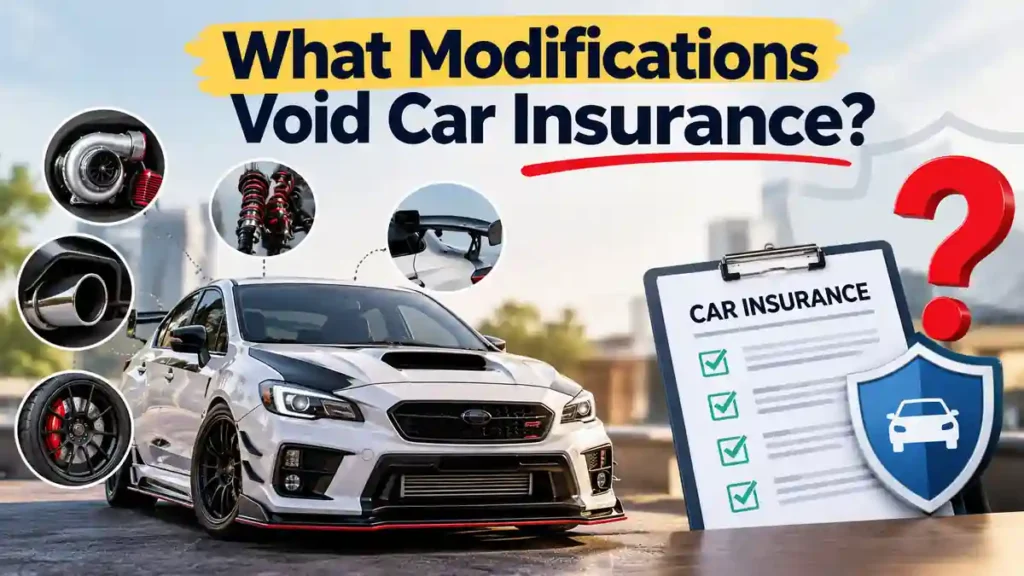
Wondering what modifications void car insurance? Upgrades like turbochargers, suspension changes, custom wheels, and exhaust systems can affect your coverage. However, not every modification automatically voids your policy. Problems can arise when you fail to disclose required changes, install prohibited equipment, or modify your vehicle beyond your insurer’s eligibility rules. Understanding which upgrades may affect coverage can help you avoid claim disputes and protect your investment.
Can Car Modifications Void Your Insurance Policy?
Yes, certain modifications can affect your insurance, but the consequences depend on your policy, insurer, and state law. It is important to understand three different outcomes:
- Policy cancellation: Your insurer ends your coverage when permitted by applicable rules.
- Claim denial: Your insurer refuses to pay a claim under specific policy terms or exclusions.
- Limited coverage: Your policy may not fully cover aftermarket parts or custom equipment.
An undisclosed modification does not automatically mean your entire claim will be denied. The circumstances and policy wording matter.
What Modifications Can Affect Car Insurance?
1. Engine and Performance Upgrades
Turbochargers, superchargers, engine swaps, ECU tuning, and nitrous oxide systems can increase performance and repair costs. Insurers may require disclosure or decline to cover certain modified vehicles.
2. Suspension and Lift Kits
Lift kits, lowering springs, coilovers, and oversized tires can change handling, stability, and vehicle height. Improper installations may also create safety concerns or violate state vehicle regulations.
3. Exhaust and Emissions Changes
Aftermarket exhaust systems may affect noise levels and emissions compliance. Removing a required catalytic converter or other emissions equipment can violate applicable laws. Check federal and state requirements before making these changes.
4. Body Kits, Paint, and Custom Wheels
Custom bumpers, spoilers, widebody kits, premium paint, and expensive rims can increase repair or replacement costs. Your standard policy may not fully cover the value of every upgrade.
5. Window Tint and Lighting
Dark tint, certain LED or HID conversions, colored lights, and flashing lights may violate state equipment rules. Check local requirements before installing them.
6. Sound Systems and Electronics
Custom stereos, subwoofers, amplifiers, and other installed electronics may need additional protection. Some insurers offer coverage for eligible aftermarket equipment, subject to policy limits.
Important: Always ask your insurer whether a planned modification must be disclosed and whether it affects your coverage.
Can Undisclosed Modifications Cause a Claim Denial?
Yes, undisclosed modifications can create coverage problems when you were required to report them. For example, if you install a high-performance engine upgrade without disclosing it and later file an accident claim, your insurer may investigate whether the missing information affects coverage.
If a modification contributed to an accident, the insurer may also examine the circumstances and relevant policy exclusions. However, neither an undisclosed modification nor an illegal modification automatically invalidates every claim. The outcome depends on the policy and applicable law.
If your insurer denies a claim, request a written explanation and review the relevant policy provisions.
Does Car Insurance Cover Aftermarket Parts?
Coverage depends on your policy and the type of loss.
- Comprehensive coverage generally applies to covered events such as theft, hail, fire, or vandalism.
- Collision coverage generally applies to covered damage from a collision.
- Custom parts and equipment (CPE) coverage may provide additional protection for eligible aftermarket upgrades.
Even when comprehensive or collision coverage applies, limits and exclusions may affect payment for custom wheels, stereos, body kits, and performance parts.
For example, Progressive’s modified-car insurance guide explains options for insuring modified vehicles and custom equipment. Available coverage varies by policy, so confirm your limits and exclusions directly with your insurer.
Which Modifications Are Less Likely to Affect Insurance?
Minor cosmetic changes, vinyl wraps, dashcams, parking cameras, and manufacturer-approved accessories may be less likely to change your vehicle’s performance. Approved anti-theft devices may even qualify for a discount with some insurers.
However, no modification is guaranteed to have zero insurance impact. A valuable wrap or camera may need additional equipment coverage, and your policy may require disclosure of certain changes.
How to Modify Your Car Without Losing Coverage
Follow these steps before upgrading your vehicle:
- Contact your insurer before installation.
- Explain exactly which parts you plan to change.
- Confirm that your modified vehicle remains eligible for coverage.
- Ask about premium changes, deductibles, and coverage limits.
- Check whether CPE coverage or a specialist policy is needed.
- Keep receipts, installation records, and photographs.
- Request written confirmation of important coverage details.
- Check state safety and emissions laws.
These steps can help prevent unexpected coverage disputes and repair costs.
Does Car Modification Affect Your Factory Warranty?
Car insurance and factory warranties are separate. A modification does not automatically void an entire vehicle warranty, although a manufacturer may deny a particular repair if the modification caused the problem or the repair falls outside warranty coverage. The terms and applicable law matter. The FTC’s warranty guidance explains this distinction.
Frequently Asked Questions
What modifications void car insurance?
There is no universal list. Performance upgrades, suspension changes, and custom equipment may affect eligibility or coverage depending on your insurer and policy.
Does installing a turbocharger void car insurance?
Not automatically. Tell your insurer about the upgrade when required and confirm that your policy covers the modified vehicle.
Do I need to report a car wrap?
Check your policy and ask your insurer. Expensive wraps may increase repair costs or require additional coverage.
Can you insure a heavily modified car?
Yes, some insurers specialize in modified vehicles. Eligibility depends on the modifications and the insurer’s rules.
Should I tell my insurer before modifying my car?
Yes. Confirm disclosure requirements and coverage before installation to reduce the risk of unexpected problems.
Final Thoughts
Not every modification voids car insurance, but undisclosed upgrades, policy exclusions, and uncovered aftermarket parts can create problems. Contact your insurer before making significant changes, check applicable laws, and get important coverage details in writing. Taking these precautions can help you customize your vehicle while protecting your insurance coverage.
Read Also:-Does Homeowners Insurance Cover Car Damage in Driveway