
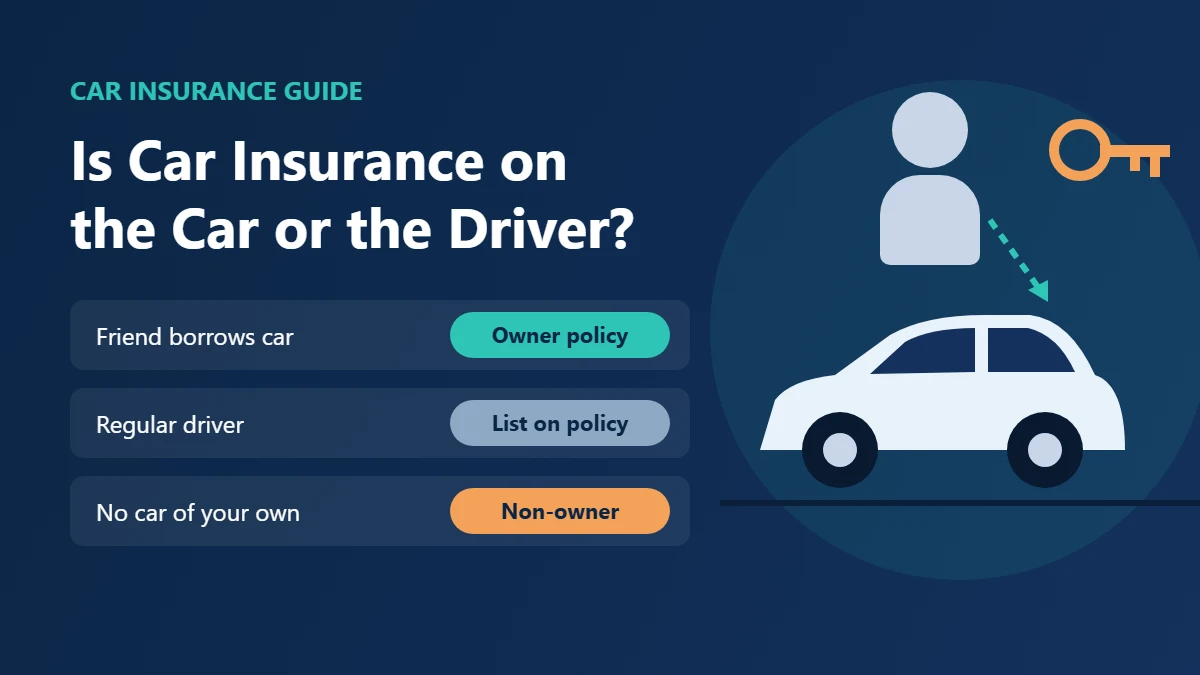
In most cases, car insurance follows the car, not the driver. If you lend your car to a friend with your permission and they cause a crash, your policy usually pays first. But the driver still matters. Insurers price your policy based on the people listed on it, people who drive your car regularly should be listed, and some drivers can be excluded entirely. If you don’t own a car, a non-owner policy can cover you as a driver.
Here’s how coverage works in common situations.
Who’s Covered in Common Situations
| Situation | Whose insurance usually pays first |
|---|---|
| A friend borrows your car with permission | Your policy (the car owner’s) |
| You borrow a friend’s car | Your friend’s policy |
| A household member drives your car regularly | Your policy, if they’re listed |
| An excluded driver drives your car | Usually no coverage |
| Someone takes your car without permission | Often the driver’s own insurance, if any |
| You don’t own a car but drive often | Your non-owner policy (liability) |
Why Insurance Generally Follows the Car
According to Progressive, while there are exceptions, car insurance generally follows the car and not the driver. The Texas Department of Insurance (TDI) explains that most policies cover you, your family, and people driving your car with your permission.
That’s why the owner’s insurance is usually the first to respond. TDI states that if you cause an accident while driving a borrowed car, the car owner’s insurance pays the claim. Your own insurance pays only if the owner has no insurance or not enough.
Lending Your Car: Permissive Use
Progressive explains that allowing another licensed driver to borrow your vehicle is known as “permissive use.” Many policies cover occasional permissive drivers, but rules vary. Keep in mind:
- Your policy pays first, so a claim from their crash can affect your record and premium.
- Limits are shared. Serious damage can exceed your limits, and the driver’s own insurance could then help, depending on its terms.
- Some policies limit coverage for permissive drivers, so read yours before lending your car.
Where the Driver Matters
Your insurer prices your policy partly on who drives the car. That’s where the driver side comes in.
Regular and Household Drivers
Progressive says anyone who regularly drives your vehicle should be listed as a driver on your policy, and household members who aren’t listed may be denied coverage if they borrow your vehicle and are involved in an accident. If a roommate, partner, or teen driver uses your car often, add them.
Excluded Drivers
You can sometimes remove a high-risk driver from your policy to lower the cost. The California Department of Insurance warns that some drivers might be excluded from your policy, which means the policy will not cover accidents when they are driving. Never let an excluded driver use your car.
Unlicensed Drivers
Permissive use generally applies to licensed drivers. If you knowingly let someone without a valid license drive your car, your insurer may deny the claim or limit coverage, and you could face legal consequences in some states. Even if a claim is paid, it can raise your premium or lead to non-renewal. Always confirm a driver’s license status before handing over your keys.
Will an Accident in Your Borrowed Car Raise Your Rates?
It can. Because the owner’s policy usually pays first, the claim typically goes on the owner’s insurance history, even though someone else was driving. Depending on the insurer, that can affect the owner’s premium at renewal. The person who was driving may also see their own rates affected if their insurer learns of the at-fault accident.
Borrowing Someone Else’s Car
If you borrow a friend’s car occasionally, their policy usually covers you first, and your own liability coverage may help if their limits aren’t enough. If you drive someone else’s car regularly, ask to be added to their policy, since regular use may not be covered as occasional borrowing.
What If Someone Takes Your Car Without Permission?
If a person drives your car without your permission, your liability coverage may not apply to them. Progressive notes that in this case the driver’s own insurance may be responsible. If your car is stolen, your comprehensive coverage can pay for theft and damage, minus your deductible. Report it to police right away.
Non-Owner Insurance: When It Follows the Driver
If you don’t own a car but drive often, you can buy coverage that follows you. TDI says that if you don’t own a car but borrow one often, you can buy a nonowner liability policy, but it doesn’t pay for your injuries or damage to the car you’re driving. Progressive adds that a non-owner policy primarily covers you as the driver, not a specific car, and that not every insurer offers it. Learn more in our guide on whether you can insure a car you don’t own.
Rental Cars and Business Use
When you rent a car, your personal policy may extend to it in many cases, but coverage varies by insurer and state, so check before you decline the rental company’s protection. Driving for a rideshare or delivery app is different: personal policies often exclude it, so you may need a rideshare endorsement or commercial coverage.
Tips Before You Hand Over Your Keys
- Confirm the driver is licensed and not excluded from your policy.
- Check your liability limits, since a serious crash could exceed them.
- Add regular drivers to your policy instead of relying on permissive use.
- Call your insurer if you’re unsure who’s covered.
The Bottom Line
Car insurance generally follows the car, so the owner’s policy usually pays first when someone borrows it with permission. But drivers still matter: regular and household drivers should be listed, excluded drivers aren’t covered, and people without a car can buy non-owner insurance. Before lending your car or borrowing someone else’s, check who the policy covers.